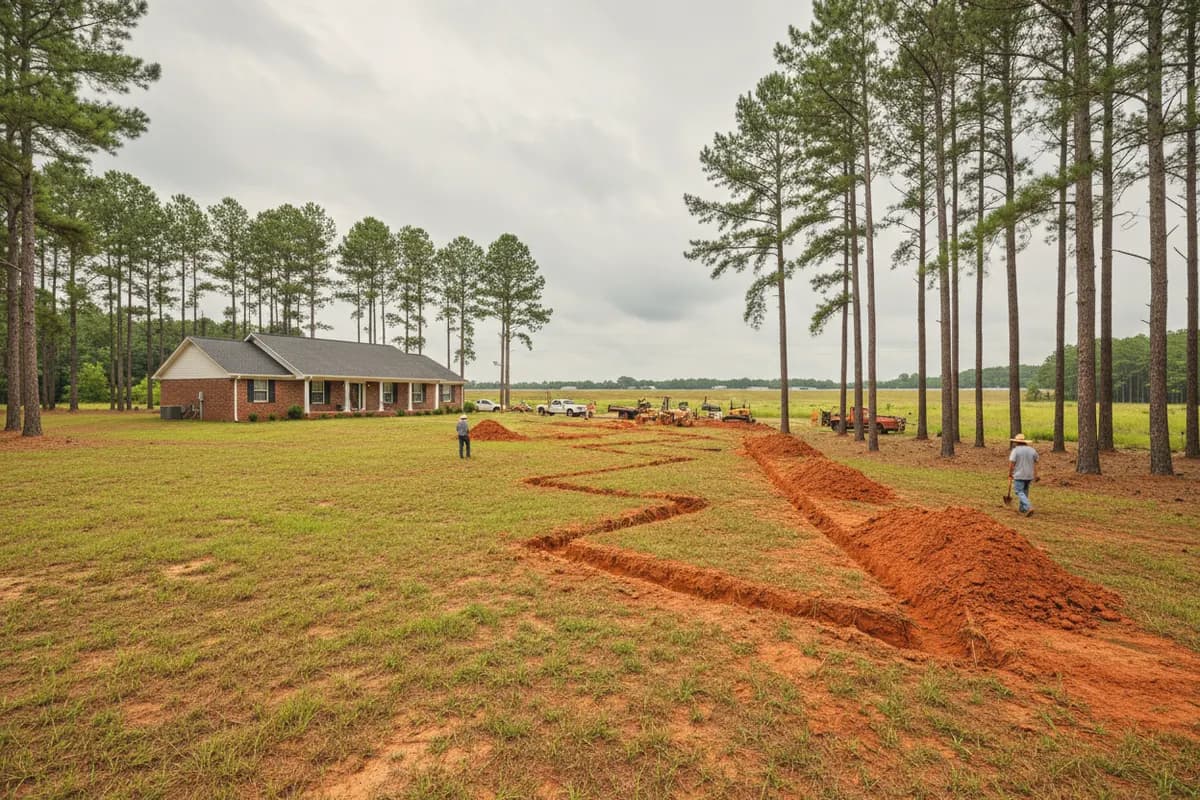
Georgia requires every trench to be built true to grade, and the absorption lines level or on no more than four inches of fall end to end (DPH Manual). That is easy on a pasture and hard on a lot that drops 30 feet to the water. On hillsides the usual answer is serial distribution: each trench is cut along a contour line, and an overflow pipe carries effluent to the next trench only after the one above has filled. The overflow has to leave a 12-inch block of undisturbed earth at the trench end, so a sloppy excavator can turn a serial field into a single long ditch that dumps everything into the bottom line.
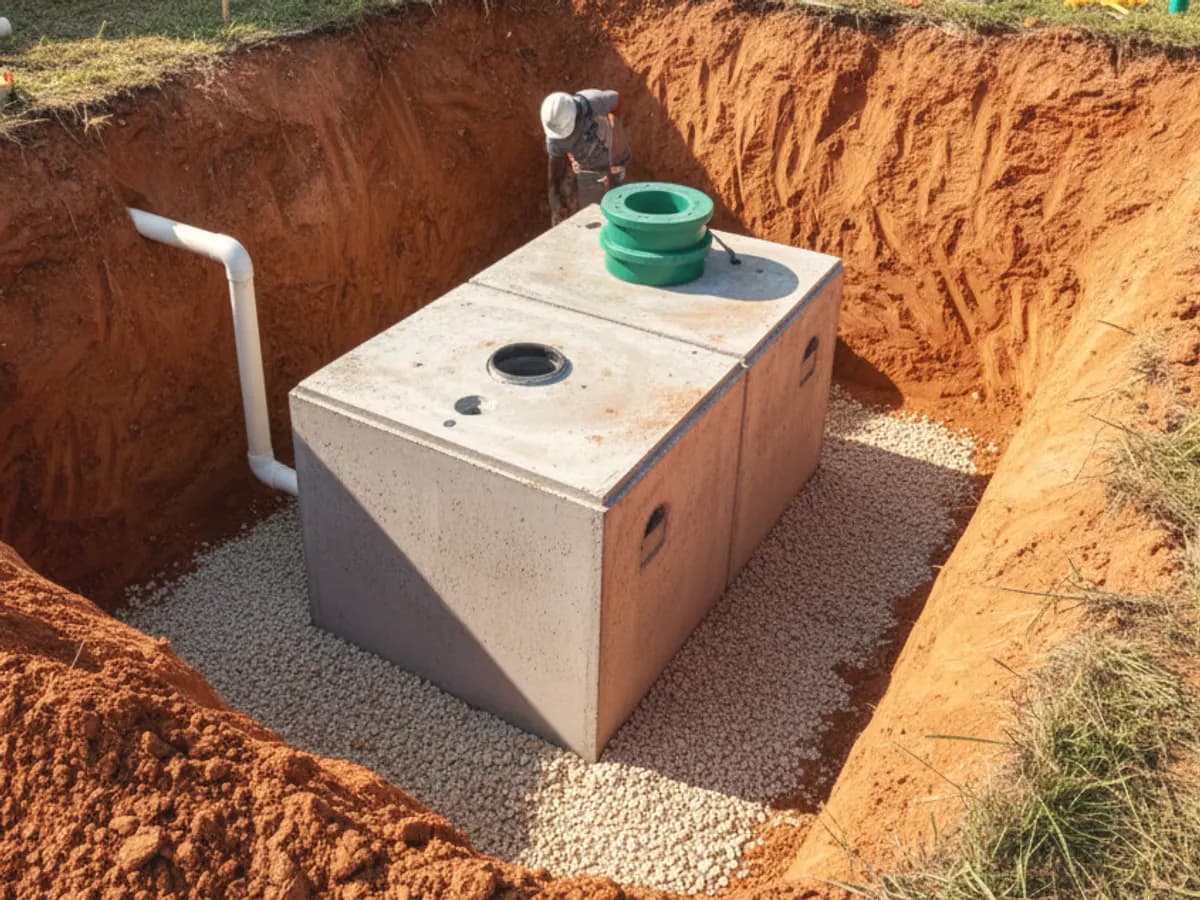
The other slope problem is the distribution box. A box set on loose fill tilts downhill within a few years, and the lowest outlet starts taking most of the flow. Georgia's manual requires a concrete or firm earthen foundation that extends at least 12 inches past the box walls. When we repair a field that has only one wet trench, the box is the first thing we dig up.
Water from above causes as many failures as sewage from inside. A new driveway, a gutter downspout or a cleared slope above the field can send stormwater straight into the trenches. Rerouting it with a French drain, a swale or a storm drain is often part of a lasting field repair. On Lake Oconee, Georgia Power doesn't allow drainage pipes to run across its property; they must stop at the project boundary and transition to swales, French drains or dry creek beds (Georgia Power).
Timing matters in clay. DPH says trenches in soils other than sand must not be dug when wet, because compaction and smearing can permanently damage the soil structure. After a week of rain, a responsible installer waits. Equipment traffic is the same story: no part of a field other than solid watertight pipe may be driven on, paved or built over, so we keep trucks, fill piles and dumpsters off the replacement area during the job.
Finally, the replacement area. Georgia requires enough unobstructed land on every permitted lot to rebuild the entire field. On lake lots that area is often the only flat ground left, and owners are tempted to put a pool, a shed or a boat parking pad there. Before you build anything, check your permit's site plan; on Georgia Power lease lots at Sinclair, the repair area also has to stay outside the project boundary (Georgia Power).