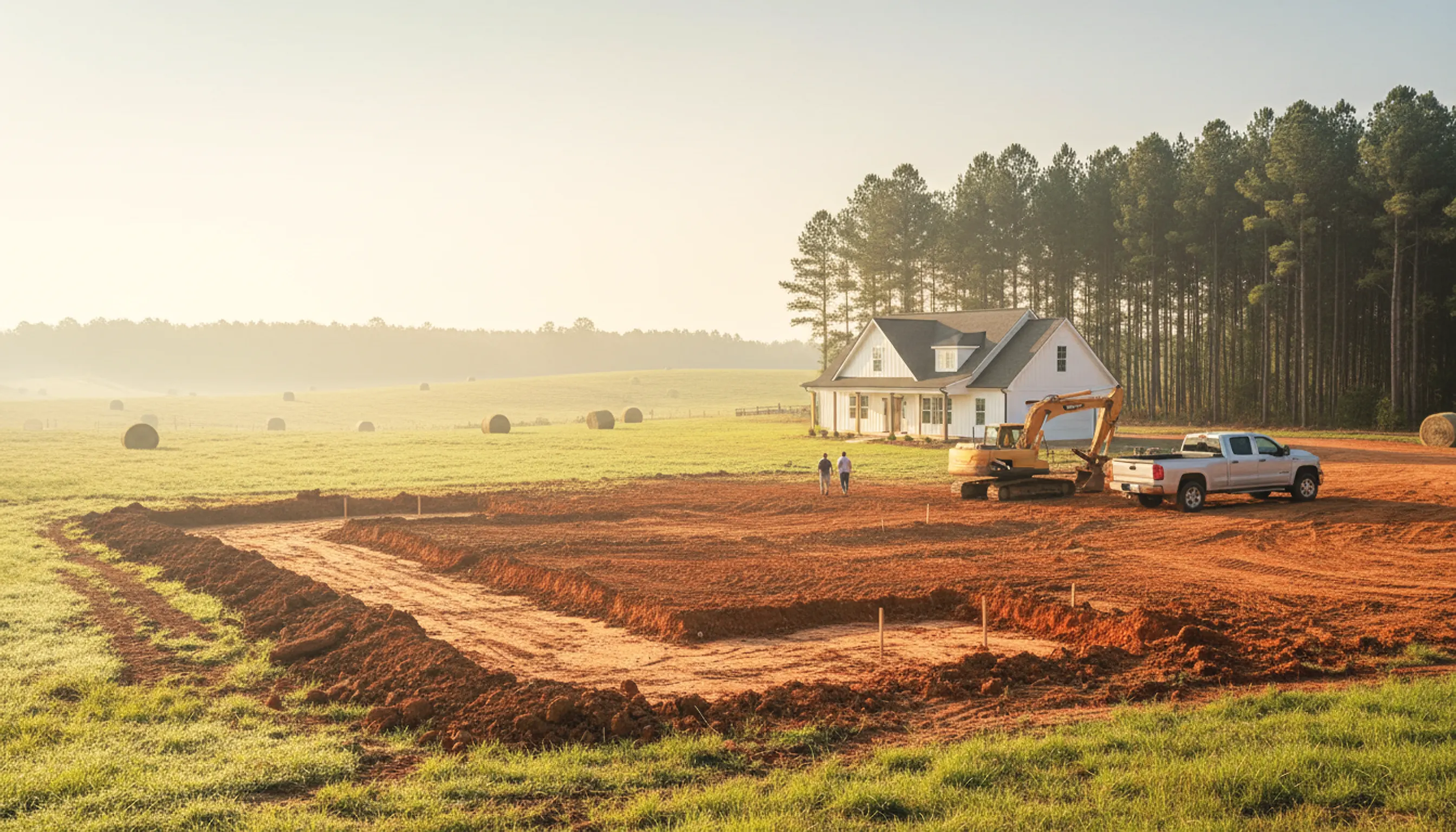
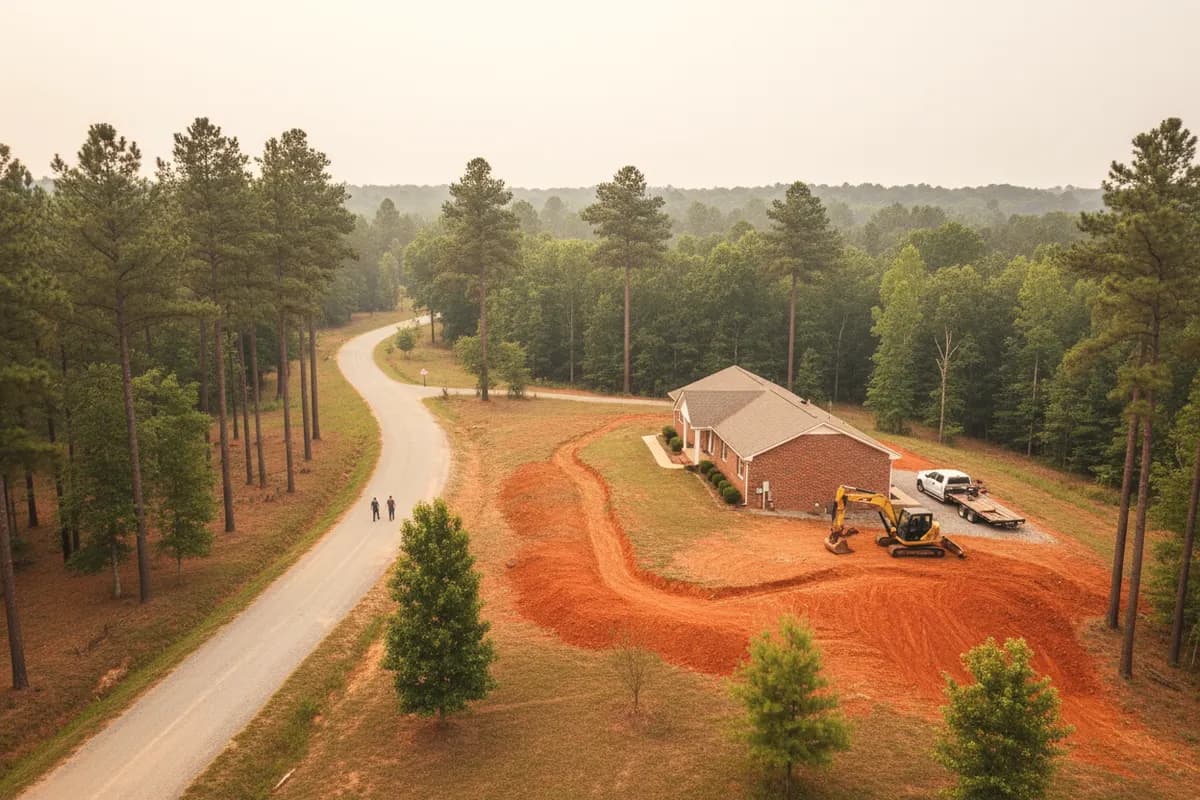
A lot that drops toward Lake Oconee or Lake Sinclair practically designs its own foundation. Cut the house into the hill and the downhill side opens to the view at grade, with doors to a patio and the path to the dock. On Lake Sinclair leased lots it matters for another reason: Georgia Power limits dwellings to two stories above ground (Georgia Power, Lake Sinclair), so living space below the upper floors is how many owners get the room they want.
The same rules govern where the hole can go. New construction there has to sit outside the project boundary and at least 75 feet from the shoreline, or farther if the county setback is greater, and the septic system with its repair area has to fit on the lot without disturbing the project boundary. If the house and septic don't fit, Georgia Power says the dwelling should be modified. We lay out the basement after the septic area is fixed, not before.
The ground under that hole varies a lot. A Davidson or Cecil soil can be clay or saprolite well past basement depth, which digs cleanly (Davidson). A Wilkes soil on a ridge can reach hard bedrock around 40 to 60 inches, right at footing depth (Wilkes). A Helena soil may hold a perched water table 18 to 30 inches down from January to April (Helena), which means a winter basement dig can fill with water overnight. A test pit with the machine before the price is set is cheap insurance against all three.
There's also the plumbing to think about. A basement bathroom sits lower than everything else in the house, and often lower than the inlet of a septic tank that was placed downhill toward the lake. Fixtures that can't drain by gravity need a pump, so the basement floor elevation, the sewer exit and the septic pump system should be decided together before we dig.