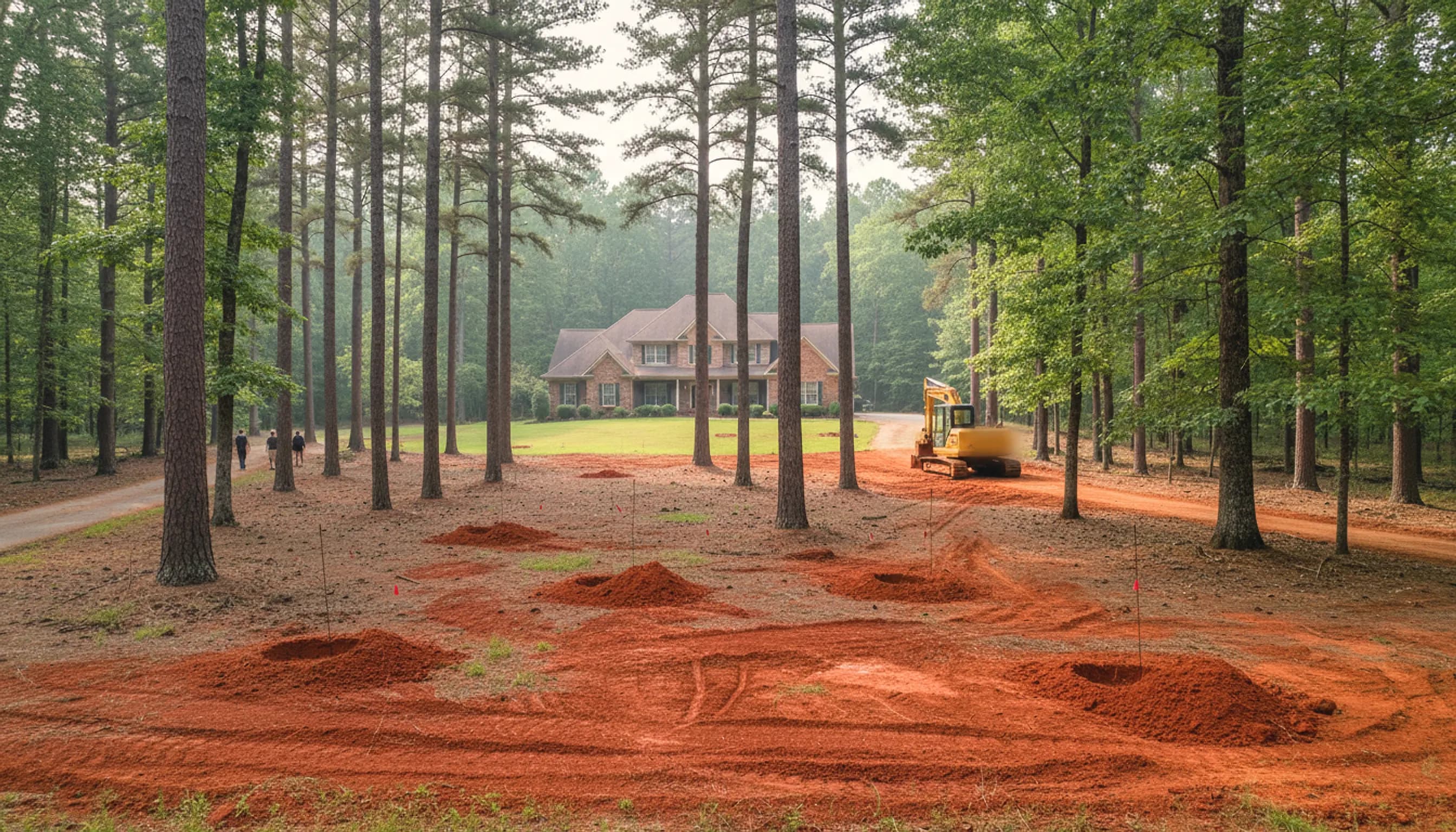
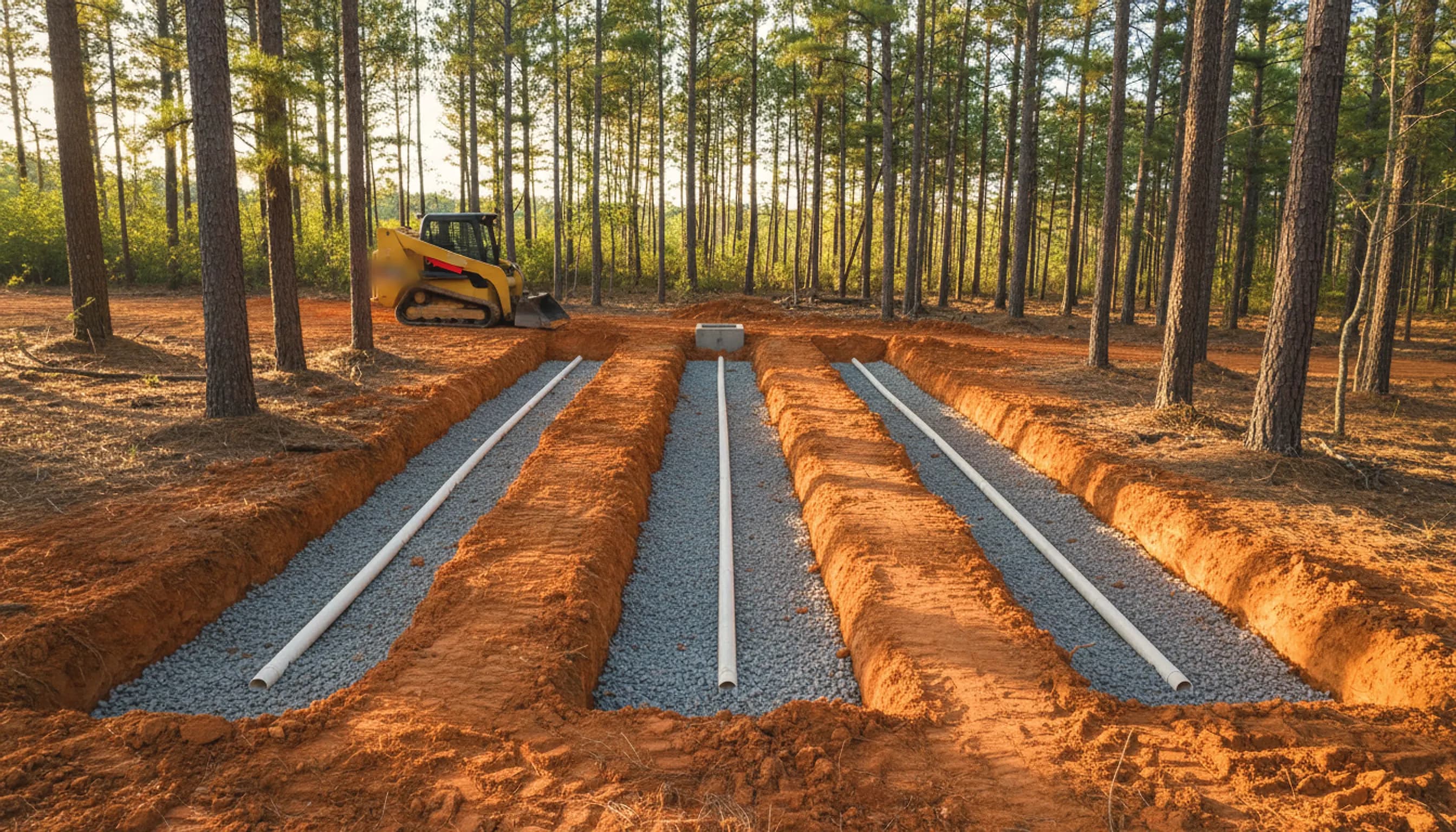
The lakes sit in Georgia's Piedmont, where red clay subsoil lies over weathered rock, often only a few feet down on the ridges and points that make the best lake lots. A conventional trench needs two feet of good soil under it plus the depth of the trench itself; a drip line needs one foot under tubing that is buried less than a foot. On a lot with three feet of soil over rock, that difference decides the permit.
Slope is the second filter. Georgia keeps absorption fields off slopes steeper than 25 percent unless a soil classifier's special study says otherwise, and drip rules call for wider lateral spacing once slopes pass 20 percent. A lakefront lot that drops from the road to a Sinclair cove or an Oconee point often has its only gentle ground right where the house, driveway and well need to go.
Then come the lake setbacks. The field must stay 50 feet from normal lake level, and on Lake Oconee Georgia Power does not allow grading in the 25-foot shoreline buffer without approval. Lot listings make the same point in plain terms: the last lakefront release on Covey Drive in Cuscowilla was marketed as "Septic Required," and buyers on lots like that should expect the county to weigh a non-conventional design.