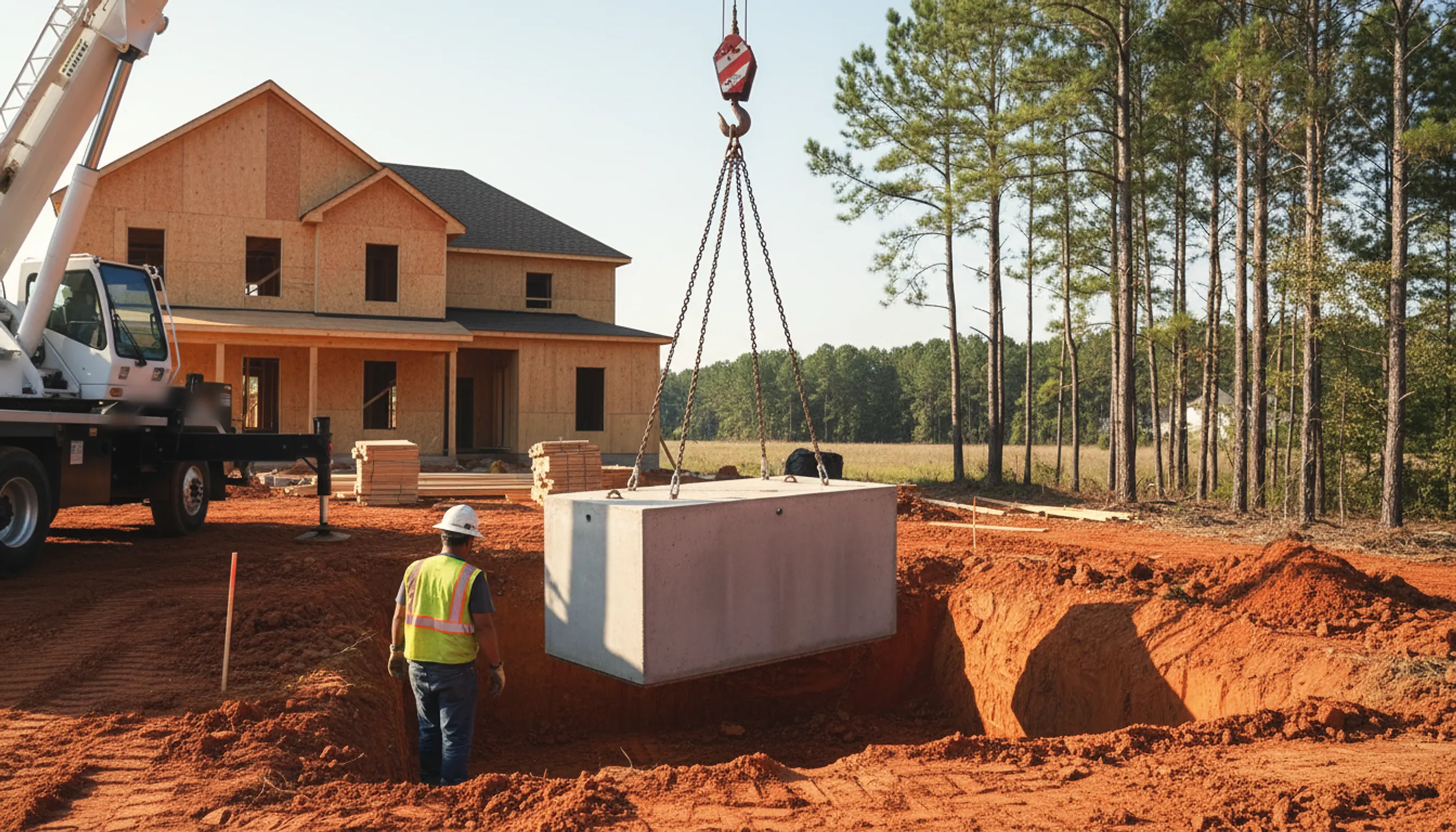
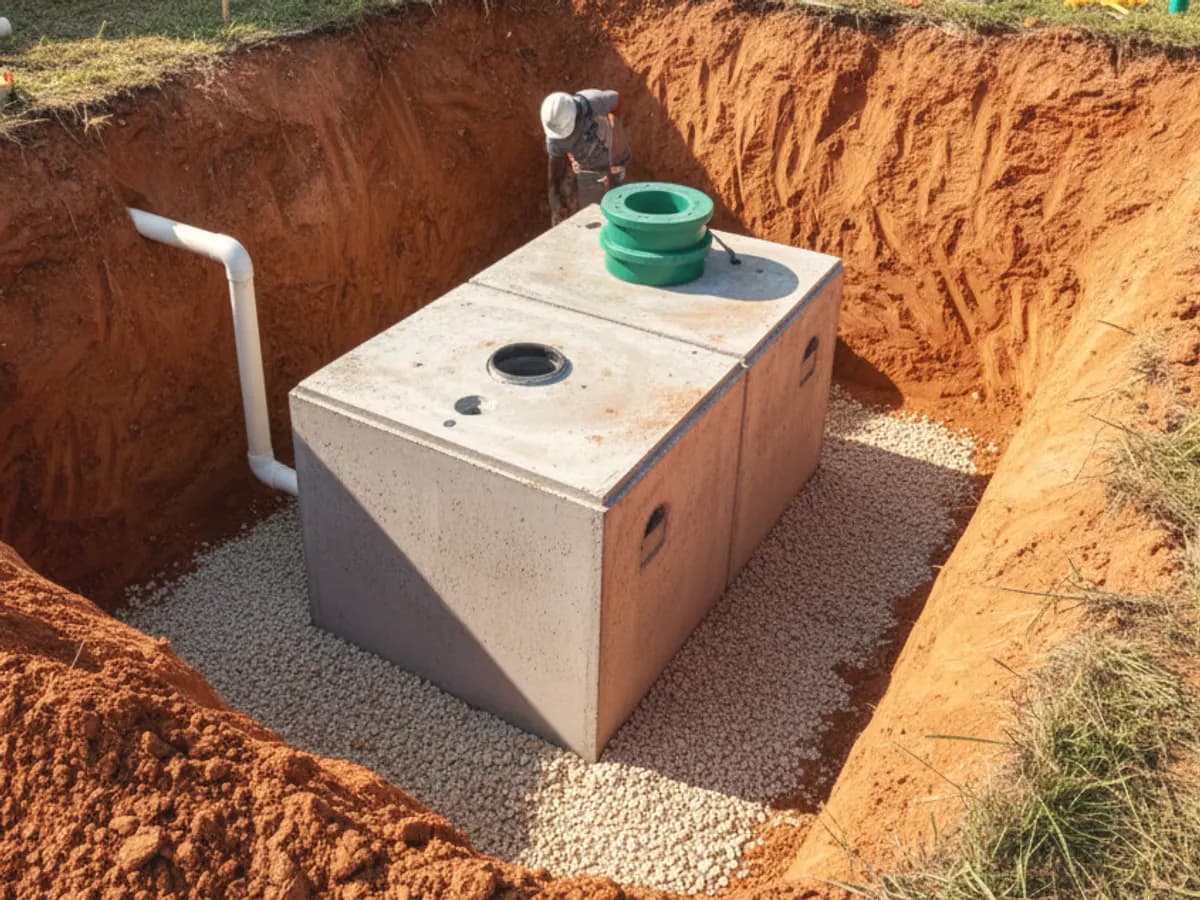
On a flat pasture in Morgan County, a new septic system is mostly a matter of digging trenches where the soil report says to. On a wooded lot that falls toward Lake Oconee or Lake Sinclair, the same job has to work around a hillside, a shoreline, a Georgia Power line and a well that may be on your lot or your neighbor's. The best soil is often the same strip the house wants, and settling who gets it is the first real decision on a lake build.
Start with the water. Georgia keeps absorption fields 50 feet from the normal water level of the lake and any feeder creek, and tanks 25 feet back (511-3-1-.07(3)). On Lake Sinclair lease lots, Georgia Power adds its own condition: the dwelling and the septic system with its repair area have to fit without disturbing the project boundary, and new houses sit at least 75 feet from the shoreline (Georgia Power). The county-approved septic site plan and permit go to Georgia Power with the building package before it reviews a new dwelling.
Then the slope. Absorption fields can't go on slopes over 25% unless a soil classifier's special investigation shows the limit can be overcome by design or site modification, and gullies, ravines and drainageways are excluded outright (DPH Manual). Lake lots in the Piedmont are full of all three. Where the usable soil sits uphill of the house, the effluent has to be pumped up to it; where the good soil is shallow, the answer is often an aerobic unit feeding drip lines that run on the contour. Those are septic pump systems, drip septic systems and aerobic septic systems, and they're on our list for exactly this reason.
Last comes everything else on the lot. Clearing for the house, a driveway cut, a retaining wall or a pool can wreck a permitted field area if equipment drives over it or fill is spread on it. Because we do the land clearing, grading and driveway prep and erosion control as well as the septic work, the field and its repair area can be flagged off on day one and kept off-limits until the system is in.
Seasonal use matters too. Of Putnam County's 13,505 housing units, 2,498 are held for seasonal, recreational or occasional use (ACS 2020-2024). A weekend house that sits empty and then fills with guests puts surges on the tank and field, and that belongs in the sizing and layout conversation, especially for a home that may be rented.