The lake shorelines were the last land in these counties to be built on, and much of it was left for last for a reason: steep, rocky banks and pockets of shallow soil over weathered rock. Georgia denies conventional and chamber permits where rock or a tight layer sits less than two feet below the trench bottom, but drops that to one foot where aerobic pretreatment produces Class I effluent (DPH Manual). On a lot where the soil classifier found 20 inches of good soil, that foot is the difference between a buildable lot and an unbuildable one.
The same logic applies to drip. Georgia's drip-emitter standard requires aerobic pretreatment to 25 mg/L BOD and 30 mg/L TSS before effluent goes into shallow emitter lines, so nearly every drip septic system around the lakes starts with an ATU. If your permit shows drip lines, plan on owning an aerobic unit too.
Lake water quality adds weight. Nutrients matter on these reservoirs: when the Eatonton-Putnam authority's Eastside plant permit was reissued, Georgia EPD added a monthly phosphorus limit to meet Lake Sinclair's chlorophyll a criteria (EPD permit). Well-treated effluent from homes near the water is part of the same picture.
What owners underestimate is the electricity and the service. An ATU runs a blower or air pump around the clock, and DPH notes performance starts to drop after extended power failures, generally beyond 48 to 72 hours, recommending backup power be considered where outages run long. Lake neighborhoods lose power in storms. And many lake houses are part-time: Putnam County alone counts 2,498 housing units held for seasonal or occasional use (ACS 2020-2024). The bacteria in an aerobic unit live on steady flow, so ask your unit's owner's manual and service provider how to handle long vacancies.
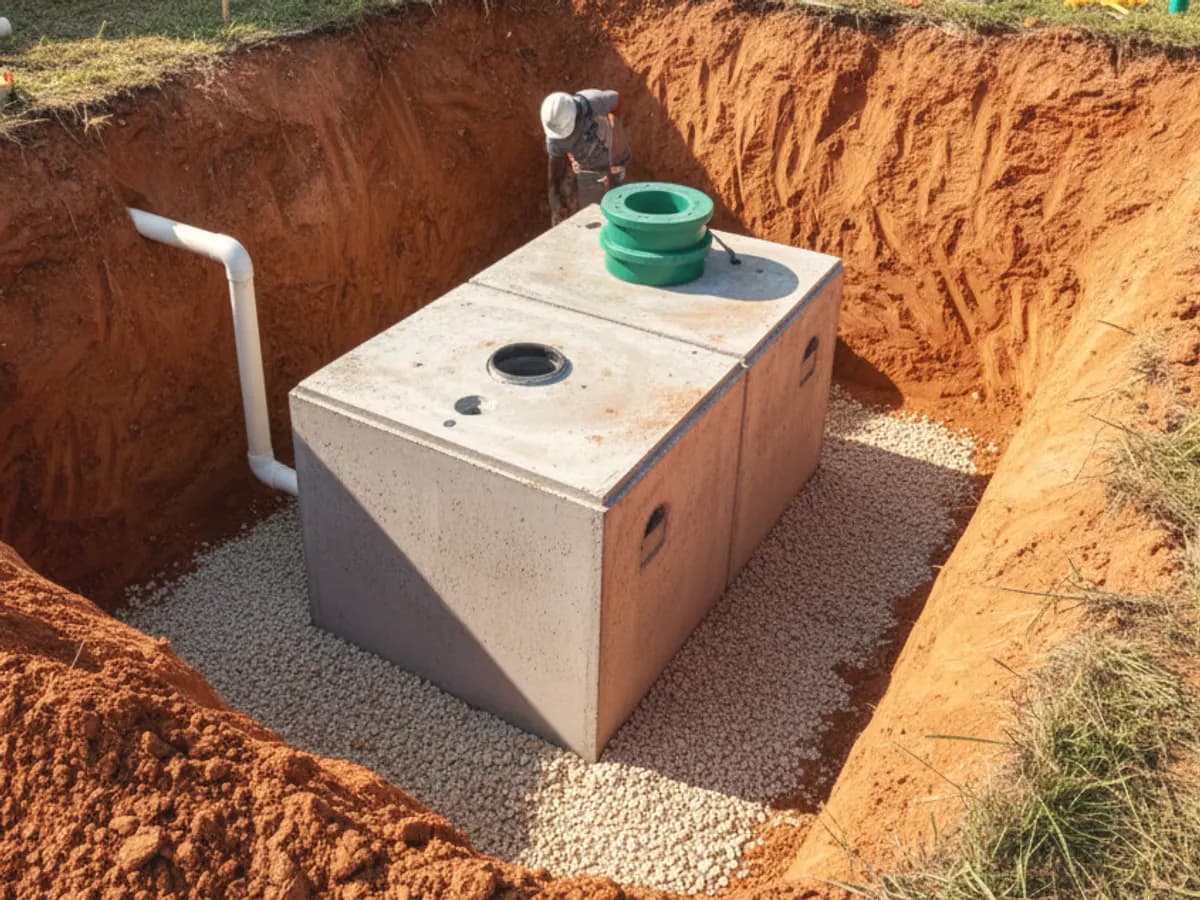
The site work matters as much as the unit. An ATU, its pretreatment tank, the pump chamber and the dispersal field all have to fit on the lot outside the setbacks, with a full set-aside area. On Sinclair lease lots, Georgia Power requires the system and repair area to stay clear of the project boundary. Because we also do the excavation, grading and trenching, tanks can be set, lines trenched and the ground restored in one sequence.