10% offfor military & first responders
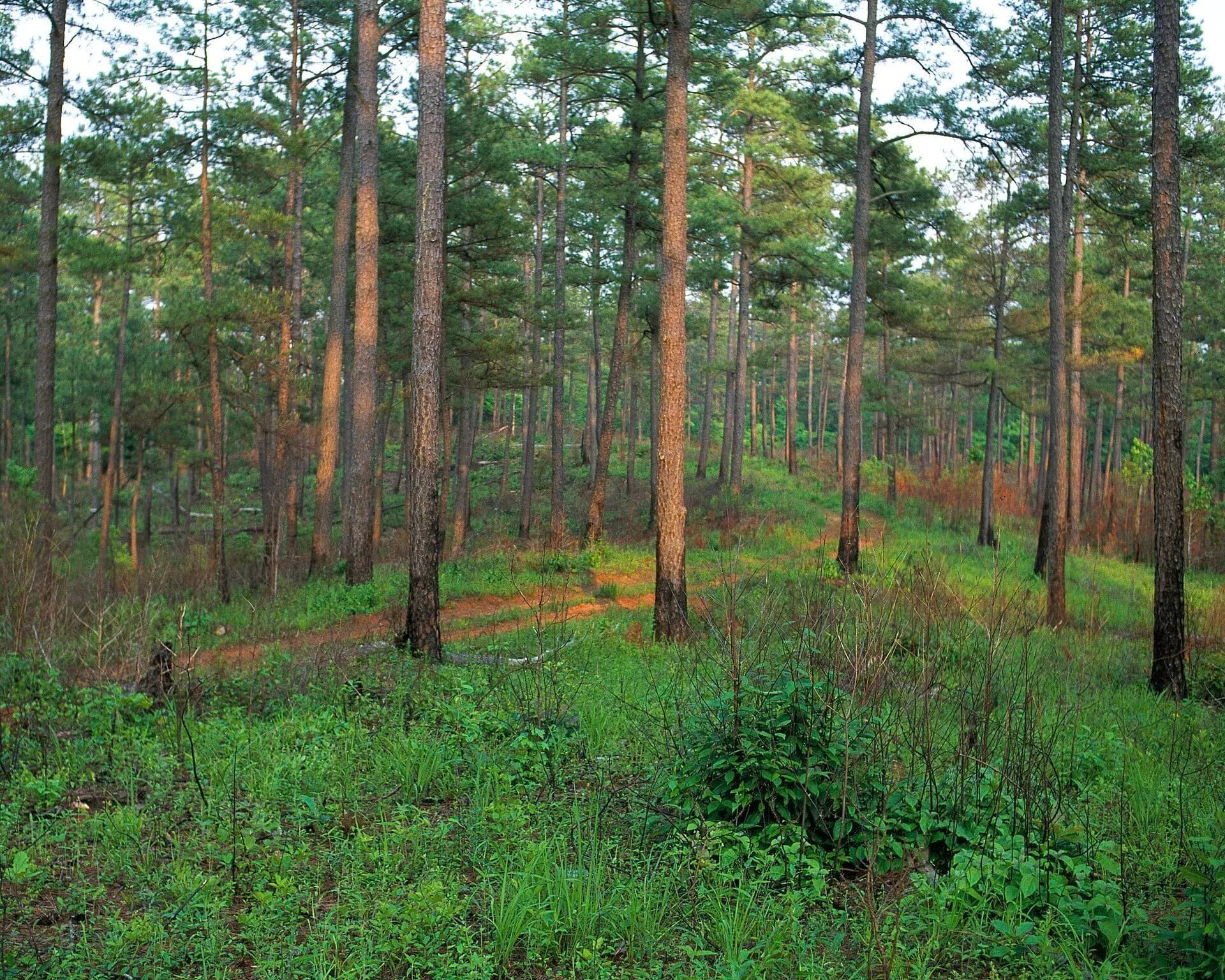
Open shortleaf pine woods with a green understory and a reddish forest floor.

Rutledge, GA · Morgan County

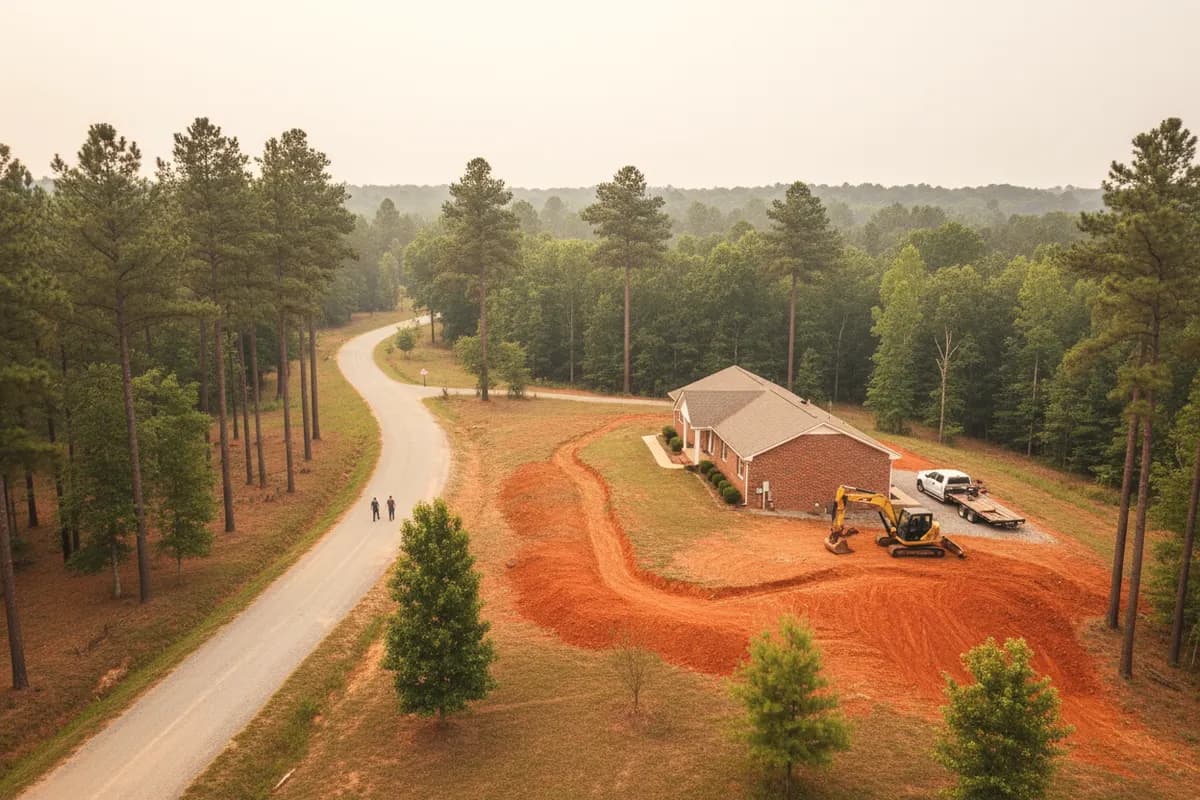
Septic installation, septic repair and excavation in Rutledge, Georgia, where a small pond-based city sewer leaves most homes and farms on septic.

Rutledge, Morgan County. ZIP code 30663.
  • Lake Oconee & Lake Sinclair
  • Residential & commercial
  • 10% off: military & first responders

Get a free estimate

or call (678) 863-5620

Property type
What do you need?
Rather talk? (678) 863-5620
Where's the property?
Is it a lake lot? (optional)
Who should we call?

By submitting, you agree we may call or text you about this request. Privacy.

The short answer

Is Rutledge, GA on sewer or septic?

Partly both. Rutledge runs a small oxidation-pond sewer plant that discharges to Rice Creek, and Morgan County's 2022 plan says it is nearing capacity. Most homes in and around town, and every farm outside it, use septic permitted by Morgan County Environmental Health in Madison. We install and repair those systems and the site work around them.↗↗↗

Reviewed by A Class Septic Services · Last updated

At a glance

County
Morgan County
ZIP codes
30663
Sewer
City of Rutledge (Rutledge WPCP, NPDES GA0025895) for part of town; private septic elsewhere
Water
City of Rutledge water system (PWSID GA2110003)
Population
871 (2020 Census)

The Rutledge story

A park town with a pond plant and a lot of septic tanks

Rutledge grew up along the railroad in the 1840s, and the town still reads that way: the tracks bound downtown on the south, City Hall sits on Newborn Road in a building that used to be a Bank of Madison branch, and US 278 carries traffic nine miles east to Madison and fifteen west to Covington. Two miles north sits Hard Labor Creek State Park.↗↗↗

What the town does not have is a big sewer plant. The city lists keeping its oxidation pond in compliance with state rules among its priorities, and the county's comprehensive plan says treatment is close to full and that expanding it would also address septic tank issues. Plenty of Rutledge households are on tanks and field lines today, and many will stay that way.↗↗

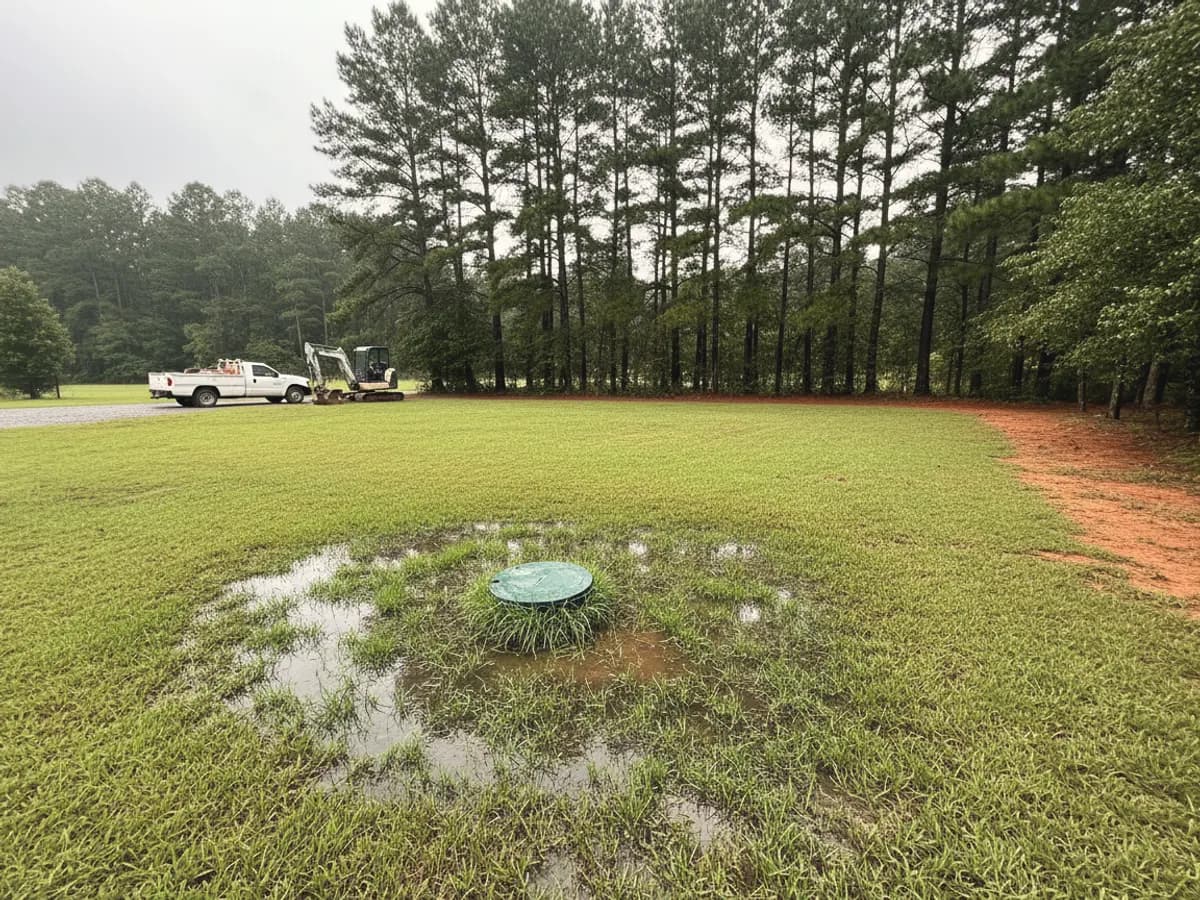
The soil under the city center is a Hard Labor and Appling mix, and Hard Labor soils move water slowly through a clay subsoil. Out the park roads (Fairplay and Old Mill) and on pasture parcels around town, a drain field has to be sized for that clay, kept out of the low spots that drain toward Rice Creek and protected from tractor traffic.↗↗↗

Rutledge grew up along the railroad in the 1840s, and the town still reads that way: the tracks bound downtown on the south, City Hall sits on Newborn Road in a building that used to be a Bank of Madison branch, and US 278 carries traffic nine miles east to Madison and fifteen west to Covington.

Sewer or septic?

City line or field lines? How to tell in Rutledge

Rutledge has never published a map of which streets its collection lines reach, so the address alone will not settle it. Your city bill will: a sewer charge means you drain to the pond plant; a water-only bill means there is a tank somewhere in the yard.↗

The city water is a different story. About 434 connections take Rutledge water, mostly purchased surface water, so plenty of septic homes in town still drink from a city meter rather than a well. That matters for lot size: Morgan County's plan cites 0.6 acre as the minimum for a septic lot and 1.2 acres when one house needs both a well and a septic system.↗↗

How to tell which one you have

  • Check your Rutledge utility bill for a sewer charge.
  • Look for a cleanout pipe near the foundation and which way the line runs.
  • Ask Morgan County Environmental Health whether a septic permit is on file for the parcel.

Local facts

Rutledge by the record

Each row links to the agency, code or publisher it comes from. Tap a source to check it yourself.

Water, sewer, soil and housing facts, each linked to where it came from.
TopicWhat it saysSource
City sewer plantRutledge WPCP, NPDES permit GA0025895, discharging to Rice Creek; permit runs to March 31, 2029EPA ECHO Detailed Facility Report: Rutledge WPCP, NPDES GA0025895
City waterRutledge Water System (GA2110003): about 434 connections and 993 people, mainly purchased surface waterEPA Envirofacts SDWIS: Rutledge Water System (GA2110003)
Soil at the city centerHard Labor-Appling complex, 2 to 6 percent slopesUSDA NRCS Soil Data Access: map unit at Rutledge city center (33.6257, -83.6097)
State park next doorHard Labor Creek State Park, 5,804 acres, with 274-acre Lake Rutledge and 48-acre Lake BrantleyGeorgia State Parks: Hard Labor Creek State Park
HousingMedian home built 1978; 418 of 437 units are single-family detached (ACS 2020-2024)Census Reporter: Rutledge, GA (ACS 2024 5-year)
Interstate access / ZIPI-20 Exit 105 (Newborn Road), 2 miles south / 30663Wikipedia: Rutledge, Georgia

Soil & terrain

Hard Labor ground: named for this corner of Morgan County

The Hard Labor soil series was named and established in Morgan County, and it shows up right under downtown Rutledge. NRCS describes it as moderately well drained with moderately low saturated hydraulic conductivity, which in field terms means water soaks into the sandy top and then slows down hard in the clay.↗↗

Georgia's septic manual says absorption trenches in anything other than sand should not be dug when the soil is wet, because the trench walls smear and compact for good. On Rutledge clay that is the single most common way a brand-new field gets ruined, and it is why we will wait out a rainy week rather than open trenches in it.↗

The south side drains through Rice Creek to Big Indian Creek; the north side runs to Hard Labor Creek and the Apalachee. State rules keep any absorption field at least 50 feet from the normal water level of a creek or pond.↗↗

  1. Hard Labor-Appling complex, 2-6% slopes↗

    Mapped at the city center; clay subsoil that slows water.

  2. Hard Labor series↗

    Moderately well drained, moderately low saturated hydraulic conductivity; established in Morgan County.

  3. Soil series · USDA NRCS

Permits · Morgan County Environmental Health (Northeast Health District), 2005 South Main Street, Suite 200, Madison

How a Rutledge septic permit works

Rutledge has no septic office of its own. Every permit for a new system or a repair inside the city or out on the county roads goes through the Morgan County Environmental Health office in Madison. We schedule the dig around that permit and its inspections.
  1. 01

    Apply to Morgan County Environmental Health for a construction permit (new system) or a repair permit; the district also does site evaluations and evaluations of existing systems.↗

  2. 02

    The county must approve or deny a complete application within 20 days, and a permit is good for no more than 12 months.↗

  3. 03

    Nothing gets covered until an Environmental Health Specialist inspects the installation and gives written approval; grading or filling over the system later can void that approval.↗

Georgia rule Ga. Comp. R. & Regs. r. 511-3-1-.03

“No person may begin the physical development of a lot or structure ... without having first obtained from the County Health Department a construction permit.”
Read the rule

Published fees

  • Residential septic tank inspection (new system)Effective 2024-08-01$350.00↗
  • Residential septic tank inspection, 5 bedroomsEffective 2024-08-01$400.00↗
  • Residential repair permitEffective 2024-08-01$200.00↗
  • Residential septic tank evaluationEffective 2024-08-01$175.00↗
  • Septic system site plan reviewEffective 2024-08-01$75.00↗

Who to call at the county

Who to call besides us

Septic permits & records

Morgan County Environmental Health (Northeast Health District)

Address
2005 South Main Street, Suite 200, Madison, GA 30650
Hours
Specialists in the office 8:00-9:30 a.m. on select weekdays; the district page lists the days two different ways, so call ahead.

FAQ

Rutledge septic and site work questions

Straight answers, with the rule or record behind them. Still unsure? Call and ask the crew that digs.

(678) 863-5620

Does Rutledge have city sewer?

Yes, a small one. The city holds NPDES permit GA0025895 for its water pollution control plant, an oxidation-pond system that discharges to Rice Creek. It does not reach every street, and most of the area around town is on septic.

Source: EPA ECHO Detailed Facility Report: Rutledge WPCP, NPDES GA0025895

Who issues septic permits for Rutledge?

Morgan County Environmental Health, part of the Northeast Health District, at 2005 South Main Street, Suite 200, in Madison. Call 706-752-1266 and choose option 3.

Source: Northeast Health District: Morgan County locations (Environmental Health)

What does a septic repair permit cost in Morgan County?

$200 for a residential repair permit and $350 for a new residential system inspection ($400 at five bedrooms), under the fee sheet effective August 1, 2024.

Source: Morgan County EH fees, effective August 1, 2024 (Northeast Health District)

How big does a lot need to be for septic near Rutledge?

Morgan County's plan cites 0.6 acre for a septic system on public water and 1.2 acres when the same house also needs a private well. Soil and slope can push it higher.

Source: Morgan County & Cities of Bostwick, Buckhead and Rutledge 2022-2036 Comprehensive Plan (GA DCA)

Why do drain fields struggle in Rutledge soil?

The city center maps as Hard Labor-Appling complex. Hard Labor soils have moderately low saturated hydraulic conductivity, so effluent moves slowly through the clay subsoil, and a field that is undersized or dug wet will back up.

Source: USDA NRCS Official Series Description: Hard Labor series

Can I burn brush when clearing a lot near Rutledge?

Not in summer. Morgan County is on Georgia EPD's May 1 to September 30 open-burning ban, and land-clearing burns outside the ban still need a Georgia Forestry Commission permit.

Source: GA EPD press release, Apr. 29, 2026: Annual Ban on Open Burning

Ready when you are

Septic trouble off US 278 or a lot to clear near the park? Call A Class.

Tell us where the property is and what is going on. We will look at the ground, tell you what Morgan County will expect, and give you a free estimate for the septic and site work together.

(678) 863-5620

Property type
What do you need?
Rather talk? (678) 863-5620
Where's the property?
Is it a lake lot? (optional)
Who should we call?

By submitting, you agree we may call or text you about this request. Privacy.

Call nowFree Estimate