10% offfor military & first responders
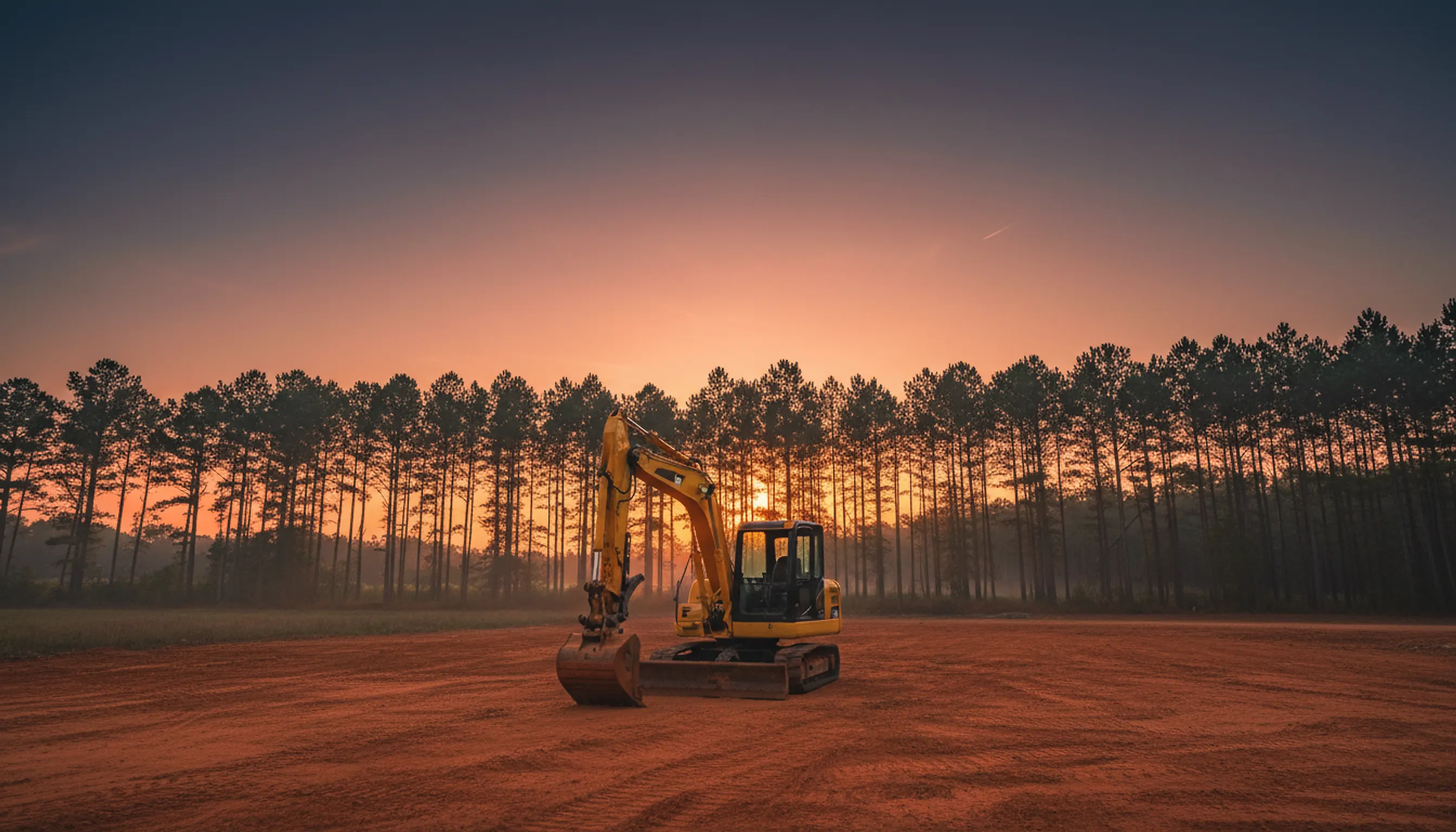
A compact excavator parked on red clay at dusk with loblolly pines silhouetted against an orange sky.

GUIDE · STORM SHELTERS & SAFE ROOMS

Storm shelter or safe room in Georgia: standards, costs and where one fits on your lot

Tornadoes crossed Putnam, Baldwin, Jones and Greene in June 2026. Here is how FEMA and ICC 500 define real protection, what shelters cost, and what clay, rock and a septic field mean for where one goes.
  • Lake Oconee & Lake Sinclair
  • Residential & commercial
  • Free estimates

Get a free estimate

or call (678) 863-5620

Property type
What do you need?
Rather talk? (678) 863-5620
Where's the property?
Is it a lake lot? (optional)
Who should we call?

By submitting, you agree we may call or text you about this request. Privacy.

The short answer

Underground storm shelter or above-ground safe room?

Both can give near-absolute tornado protection if built to FEMA P-361 and ICC 500. Underground shelters cost $4,200 to $30,000 and above-ground safe rooms $2,600 to $15,000 (HomeAdvisor, 2026). On Middle Georgia clay, a buried shelter must be anchored against groundwater at the surface and kept off septic fields.

Reviewed by A Class Septic Services · Last updated

Who does the work

One crew, raw ground to a working system

  • Homes, lake lots and commercial properties around Lake Oconee & Lake Sinclair
  • Septic systems and the clearing, grading, drainage and lines around them
  • Ask for Brandon Mosley
  • 10% off for military & first responders
(678) 863-5620

Key facts

Storm shelter standards and costs

Each row links to the agency, code or publisher it comes from. Tap a source to check it yourself.

FEMA and ICC 500 criteria for safe rooms, typical 2026 costs and recent tornado activity in the lake counties.
TopicWhat it saysSource
What a safe room isA hardened structure built to FEMA criteria that gives near-absolute protection in extreme wind, tornadoes includedFEMA: Safe Rooms
Design documentsFEMA P-361 (criteria) and FEMA P-320 (homeowner guidance and plans), both referencing ICC 500FEMA: Safe Room Resources
Current editionsFEMA P-361 5th ed. (2024), FEMA P-320 6th ed. (2024), ANSI/ICC 500-2023FEMA Fact Sheet (Nov. 2024): Foundation and Anchoring Criteria for Safe Rooms, 2024
Design wind speed250 mph for every FEMA-funded residential safe room, regardless of locationSame source as above
Buoyancy ruleIn-ground shelters must resist uplift assuming groundwater at the ground surface at the entrance (ICC 500 §303.4)Same source as above
Typical cost (national)Average $7,643; normal range $2,892 to $13,281HomeAdvisor: Tornado Shelter Cost (updated Jun 19, 2026), 2026
Septic field setbackDrain fields stay 10 ft from buildings with basements and 5 ft from those withoutGa. Comp. R. & Regs. r. 511-3-1-.07, Absorption Fields (LII)
June 2026 local tornadoEF-1, 90 mph, roughly a 10-mile path through Jones, Baldwin and PutnamAtlanta News First (June 23, 2026): tornadoes confirmed across central Georgia, 2026

Plain definitions

Shelter terms, defined

Safe room
A safe room is a FEMA-criteria hardened space, inside or outside the house, meant to protect occupants with near-absolute confidence in extreme wind.↗
Storm shelter (ICC 500)
An ICC 500 storm shelter is a structure designed and built to the ICC/NSSA standard for tornado and hurricane shelters, the consensus code FEMA's criteria reference.↗
Buoyancy (uplift)
Buoyancy is the upward push of saturated soil and groundwater on a buried, air-filled box; without enough anchoring or weight, a shelter can float.↗
Protective system
A protective system is sloping, shoring or shielding that keeps a 5-foot-plus excavation from caving on whoever is in it.↗

Your options

The four common choices

All four can meet the standard. Which one fits depends on the house, the ground and how quickly everyone can reach it.

OPTION 01

In-ground yard shelter

When it fits: Open, well-drained ground near the back door, clear of the septic tank, drain field and well.

  • Earth adds protection
  • Leaves the house plan untouched
  • Must be anchored for groundwater at the surface
  • A walk outside in the storm
  • Rock can stop the dig

OPTION 02

Garage-floor (below-slab) shelter

When it fits: An existing garage with room to cut the slab and drop in a unit.

  • Reached without going outside
  • Small surface footprint
  • Slab cutting and patching
  • Still subject to buoyancy rules

OPTION 03

Above-ground safe room

When it fits: New construction, or a garage, closet or room that can be anchored to an adequate slab.

  • No water to fight
  • Accessible for anyone with limited mobility
  • Needs a foundation that meets the anchoring criteria
  • Takes floor space

OPTION 04

Basement safe room

When it fits: Walkout basements, common on sloping lake lots.

  • Built into the excavation already being dug
  • Doubles as storage
  • Best planned before the foundation is poured
  • Walkout side faces the weather

What it costs

What storm shelters typically cost

National typical ranges from HomeAdvisor, updated June 2026. Site work, not the shelter itself, is usually what swings the total on a rocky or sloping lot.

What moves the price

Typical third-party market ranges, not our prices. Estimates are free, and military members and first responders get 10% off.

Free estimate: (678) 863-5620
  1. 01RockGranite and gneiss can sit close to the surface on Piedmont ridges; hitting it means breaking rock or moving the shelter.
  2. 02WaterClay that stays wet means heavier anchoring, a drained base and a drain line around the unit.
  3. 03AccessA crane or large excavator has to reach the hole; narrow lake drives and steep yards add time.
  4. 04Shelter type and sizeSteel, concrete and fiberglass units differ in price, weight and anchoring.

How the job runs

Putting in an in-ground shelter, step by step

  1. 1

    Pick a unit built to the standard

    Ask the manufacturer for documentation that the shelter meets ICC 500 and FEMA P-361 criteria, including its anchoring design for buoyancy.

    FEMA Fact Sheet (Nov. 2024): Foundation and Anchoring Criteria for Safe Rooms

  2. 2

    Map what is already underground

    Find the septic tank, drain field and repair area, the well and water line, and any power to a dock or shop. A shelter is a structure; it cannot sit on a drain field, and the field has to keep its setback from it.

    GA DPH Manual for On-Site Sewage Management Systems (March 2026), Section F: Dispersal Systems

  3. 3

    Check the county and the lake

    Ask the county building office what permit the shelter needs. On Lake Oconee, no structures other than permitted shoreline structures are allowed inside Georgia Power's project boundary.

    Georgia Power: Lake Oconee Shoreline Guidelines (PDF)

  4. 4

    Call 811

    File a locate request at least three business days before digging, then have private lines located separately.

    Georgia 811: Contact Georgia 811 Before You Dig, How it Works (2025)

  5. 5

    Dig safely and check the ground

    Shelter holes usually pass 5 feet, where OSHA requires sloping, shoring or shielding. Note any seepage or rock in the walls; both change the anchoring and drainage plan.

    OSHA 29 CFR 1926.652, Requirements for protective systems

  6. 6

    Set, anchor and drain

    The unit goes on a level, drained base and is anchored for groundwater at the surface. A perforated drain around the base, carried to daylight downhill, keeps water from sitting against it.

    FEMA Fact Sheet (Nov. 2024): Foundation and Anchoring Criteria for Safe Rooms

  7. 7

    Backfill and grade away

    Backfill in compacted lifts and shape the ground so rain runs away from the door. Seed or gravel the disturbed area so it does not wash.

    GA DPH Manual for On-Site Sewage Management Systems (March 2026), Section B: General Site Provisions

The whole story

Tornadoes and red clay in the lake counties

The lake counties are not tornado alley, but they are not exempt either. In June 2026 the National Weather Service confirmed an EF-1 with 90 mph winds on a roughly 10-mile path through Jones, Baldwin and Putnam, and an EF-0 with 85 mph winds that started in Putnam and crossed into Greene near Lake Oconee.

The ground is the bigger design question. Davidson, Cecil and Helena soils around Eatonton and Milledgeville carry thick clay subsoil, and the slower-draining ones hold water after rain. A buried shelter in that clay behaves like an empty boat in a bathtub, which is why ICC 500 makes designers assume water at the surface.

Lake lots add slope. A shelter dug into the low side of a yard collects every gallon running off the driveway, while one cut into the uphill side can daylight its drain line. Many lake houses already have a walkout basement, and folding a safe room into that excavation is often the cleanest answer.
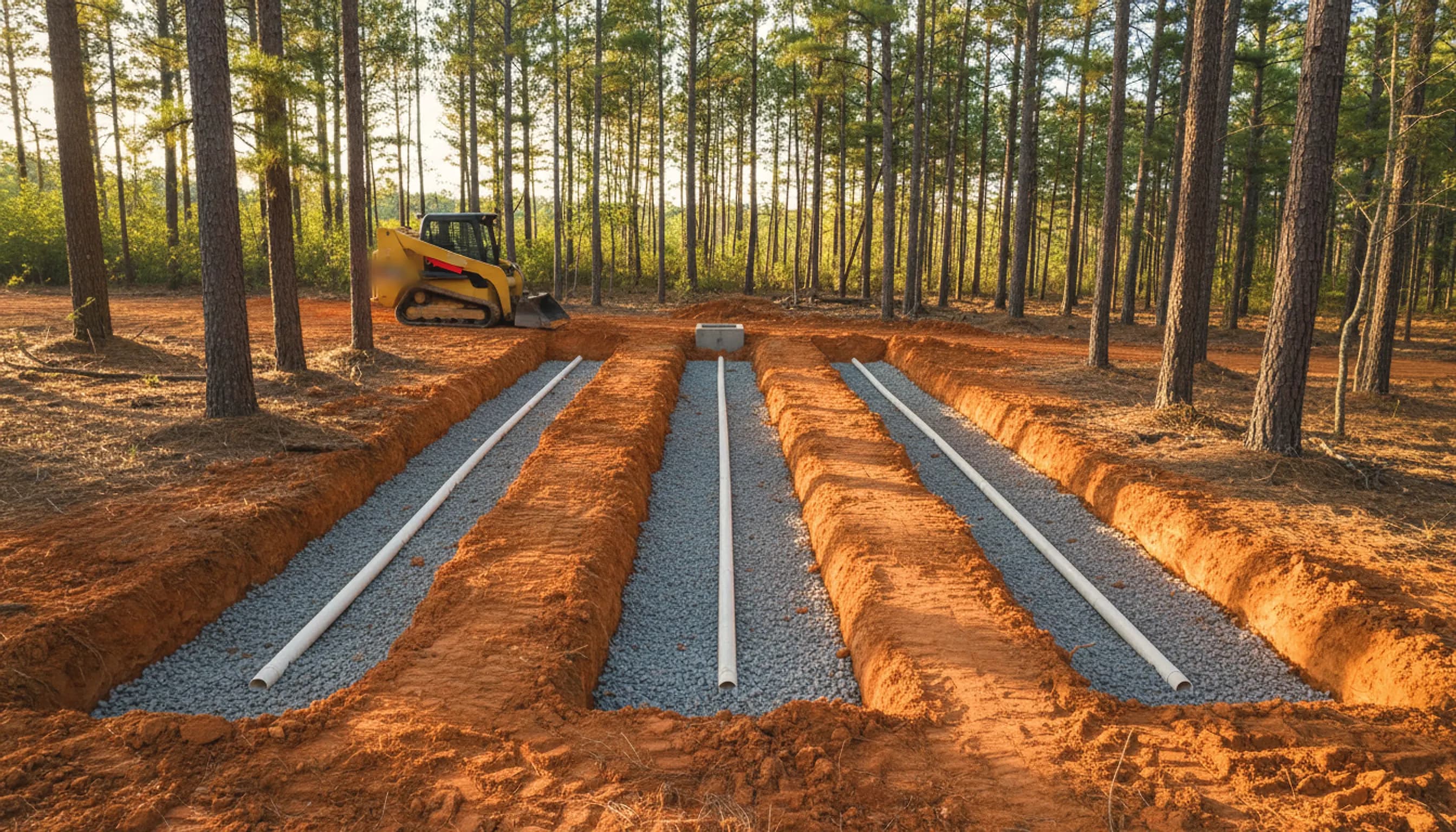
Three parallel drain field trenches of washed gravel and white pipe cut into red clay in a pine woods lot, a compact track loader behind.
Illustrative photo.

FAQ

Storm shelter and safe room questions

Straight answers, with the rule or record behind them. Still unsure? Call and ask the crew that digs.

(678) 863-5620

How much does an underground storm shelter cost in Georgia?

HomeAdvisor's June 2026 national figures put underground shelters at $4,200 to $30,000 and above-ground safe rooms at $2,600 to $15,000, with the average tornado shelter around $7,643. In Middle Georgia, rock, wet clay, slope and access for the delivery truck or crane are what usually push a buried shelter toward the high end.

Source: HomeAdvisor: Tornado Shelter Cost (updated Jun 19, 2026)

Is an underground shelter safer than an above-ground safe room?

Not inherently. FEMA treats both as safe rooms if they are designed and built to its criteria, which call for near-absolute protection and a 250 mph design wind speed for FEMA-funded residential rooms. The better choice is the one your household can reach fastest that meets the standard and suits your ground.

Source: FEMA Fact Sheet (Nov. 2024): Foundation and Anchoring Criteria for Safe Rooms

Can an in-ground storm shelter float?

Yes, if it is not anchored or weighted for it. ICC 500 Section 303.4 requires in-ground shelters to resist buoyancy assuming groundwater at the ground surface at the entrance, unless adequate drainage justifies a lower level. Clay soils that stay saturated after storms make that requirement very real here.

Source: FEMA Fact Sheet (Nov. 2024): Foundation and Anchoring Criteria for Safe Rooms

Can I put a storm shelter over my septic drain field?

No. Georgia does not allow any part of an absorption field to be covered by buildings or pavement, and drain fields must stay 10 feet from buildings with basements and 5 feet from those without. The shelter also cannot sit on the field's reserved repair area. Locate both before choosing a spot.

Source: GA DPH Manual for On-Site Sewage Management Systems (March 2026), Section F: Dispersal Systems

Which FEMA documents cover safe rooms?

FEMA P-361, Safe Rooms for Tornadoes and Hurricanes, holds the design criteria, and FEMA P-320, Taking Shelter from the Storm, is the homeowner guide with construction drawings. Both reference the ICC 500 storm shelter standard. FEMA's November 2024 fact sheet cites P-361's fifth edition and P-320's sixth edition, both from 2024.

Source: FEMA: Safe Room Resources

Have tornadoes hit the Lake Oconee and Lake Sinclair area?

Yes. In June 2026 the National Weather Service confirmed an EF-1 tornado with 90 mph winds on a roughly 10-mile path through Jones, Baldwin and Putnam counties, and an EF-0 with 85 mph winds that moved 4.4 miles from Putnam into Greene County near Lake Oconee.

Source: Atlanta News First (June 23, 2026): tornadoes confirmed across central Georgia

Do I need to call 811 before installing a storm shelter?

Yes. Digging a shelter pit takes mechanized equipment, and Georgia law requires a Georgia 811 locate request at least three business days before that kind of digging. Utilities mark their lines; anything you own past the meter, like well, septic or shop lines, has to be located separately.

Source: Georgia 811: Contact Georgia 811 Before You Dig, How it Works (2025)

A small creek with eroded red clay banks and rock ledges in pine and hardwood woods, a weathered wooden shed on the bank.

Ready when you are

Rather have a pro look at it? Call the crew that digs.

Tornadoes crossed Putnam, Baldwin, Jones and Greene in June 2026. Here is how FEMA and ICC 500 define real protection, what shelters cost, and what clay, rock and a septic field mean for where one goes.

(678) 863-5620

Property type
What do you need?
Rather talk? (678) 863-5620
Where's the property?
Is it a lake lot? (optional)
Who should we call?

By submitting, you agree we may call or text you about this request. Privacy.

Call nowFree Estimate
