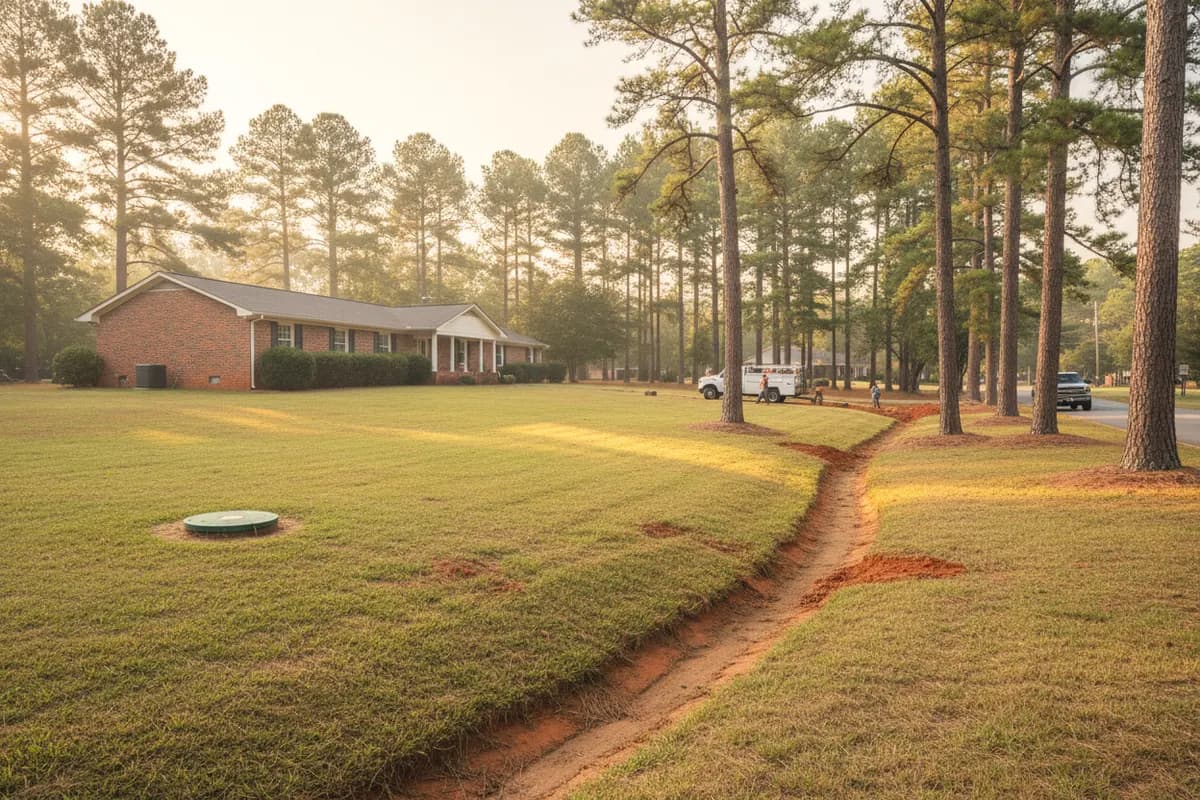
Water on a lake lot always runs toward the lake, and that is exactly what the rules are built around. Georgia Power's Lake Oconee guidelines say drainage pipes, regardless of origin, may not run across its property or project boundary; a pipe has to terminate at the boundary and hand the water off to a swale, a French drain or a dry creek bed. A storm drain that worked on an inland lot, piped straight to the water's edge, is not allowed here.
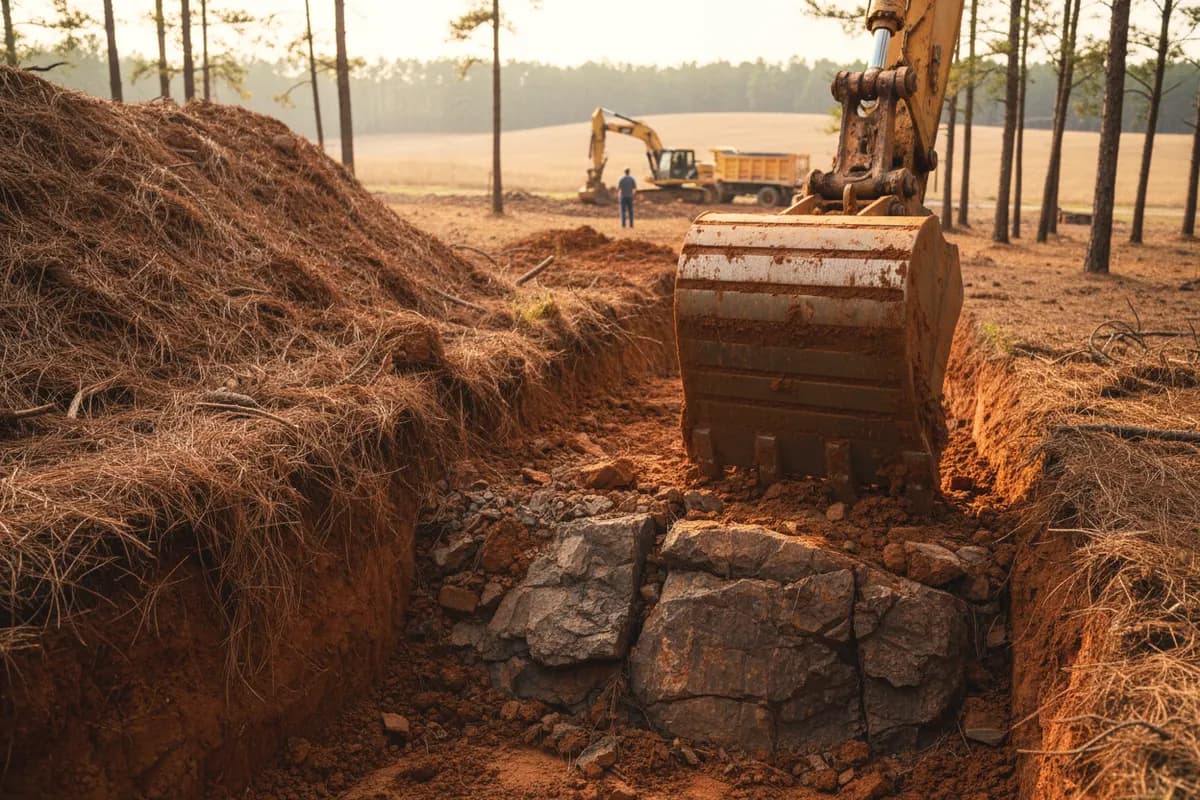
The soils make the problem worse. NRCS maps Wilkes soils on 10 to 25 percent slopes across tens of thousands of acres of the Baldwin, Jones and Putnam survey area, and the Piedmont clays under most lake lots shed water instead of soaking it in. Runoff from a roof, a long drive and a sloped lawn gathers speed fast, and every gallon that reaches the lake carries some of your yard with it.
Septic systems complicate the layout. A drain field is a soil treatment area that only works when it is not flooded, so the U.S. EPA tells owners to keep roof drains, sump pumps and other rainwater drainage away from it. On a lake lot where the house, drive and drain field share a narrow strip between road and water, a storm drain often exists mainly to steer water around the field.