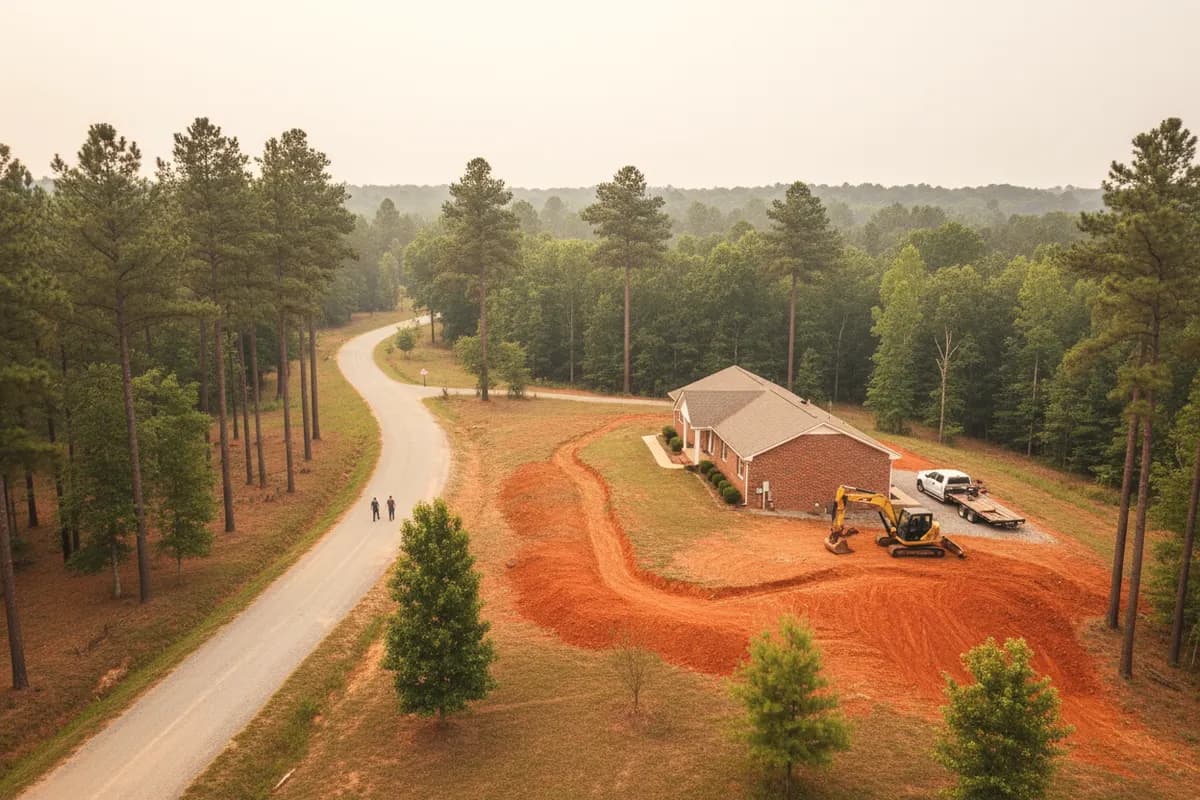
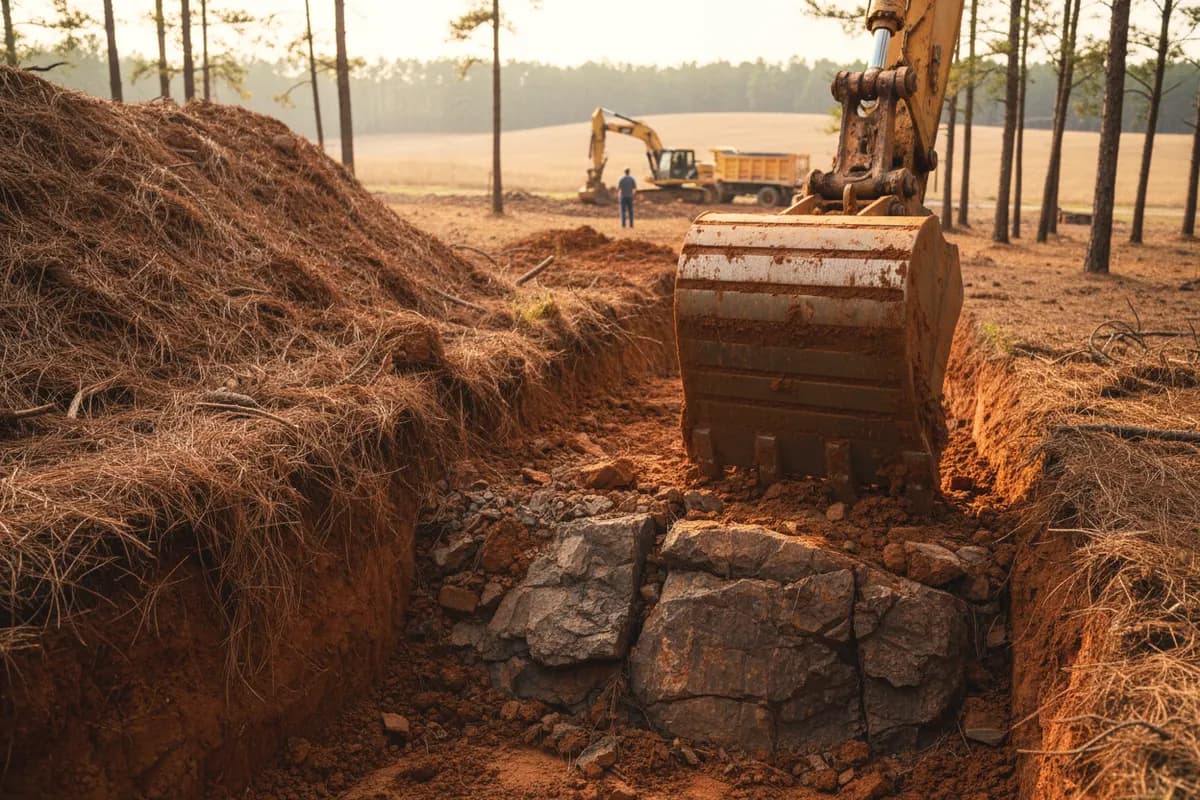
On open farmland the goal of clearing is usually simple: get everything off and leave bare dirt. A lake lot runs the other way. The trees nearest the water are holding the bank, shading the cove and filtering runoff, and Georgia Power treats them that way. Its Lake Oconee guidelines say unauthorized clearing within 25 feet of the shoreline or on project lands is prohibited, and where it happens Georgia Power can require a revegetation plan and even pull permission for docks (Georgia Power).
Georgia Power will consider tree removal on its land for a few reasons, including dead or hazardous trees and to make room for construction such as a home, a seawall or a septic installation. The application has to count the trees, list their diameter and species, give the reason and include photos, and approved removals are replanted at least one for one. On Lake Sinclair leased lots, the package for a new home includes a landscaping plan showing the trees 4 inches or larger to come out inside the building perimeter, driveway included (Georgia Power, Lake Sinclair).
So we clear lake lots from a plan, not from the road in. The house footprint, the driveway, the septic tank, the drain field and its repair area, and the working room around each get flagged first. Everything outside those lines stays unless there is a reason to take it. That usually saves money too: fewer trees down means fewer stumps, less debris to burn or haul, and less bare clay to stabilize before the first storm.
Putnam County's own 2022 comprehensive plan describes the Sinclair and Oconee shorelines as the county's main population hubs outside Eatonton (Putnam joint plan), and the same is true along the Greene and Morgan sides of Lake Oconee. That density means neighbors, docks and coves close by, so smoke, noise and runoff from a clearing job are everyone's business.