On the lake, gravity always points at the water, which is exactly where Georgia Power does not want your pipe. Its Lake Oconee guidelines say drainage pipes, whatever their origin, may not run across its property; they end at the project boundary and turn into a swale, French drain or dry creek bed that spreads the water before it reaches the shore. A storm line that simply dumps into the lake at the seawall is not an option there.
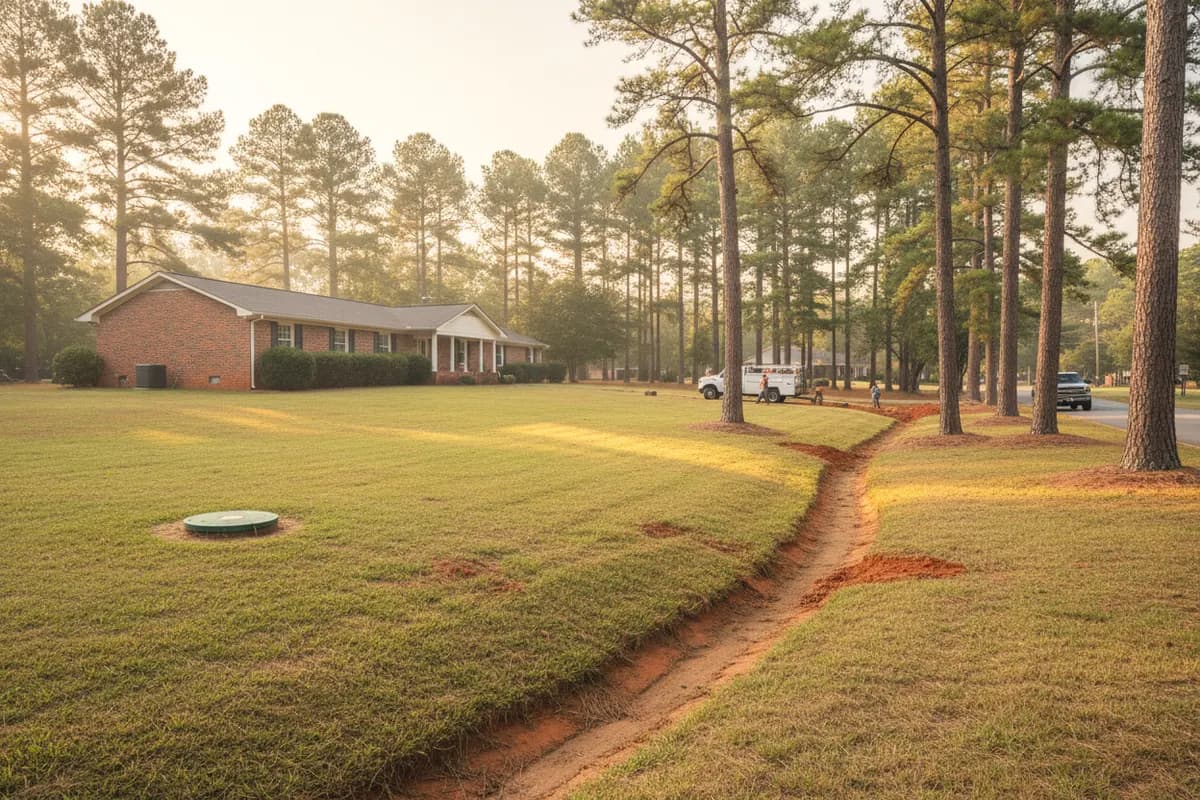
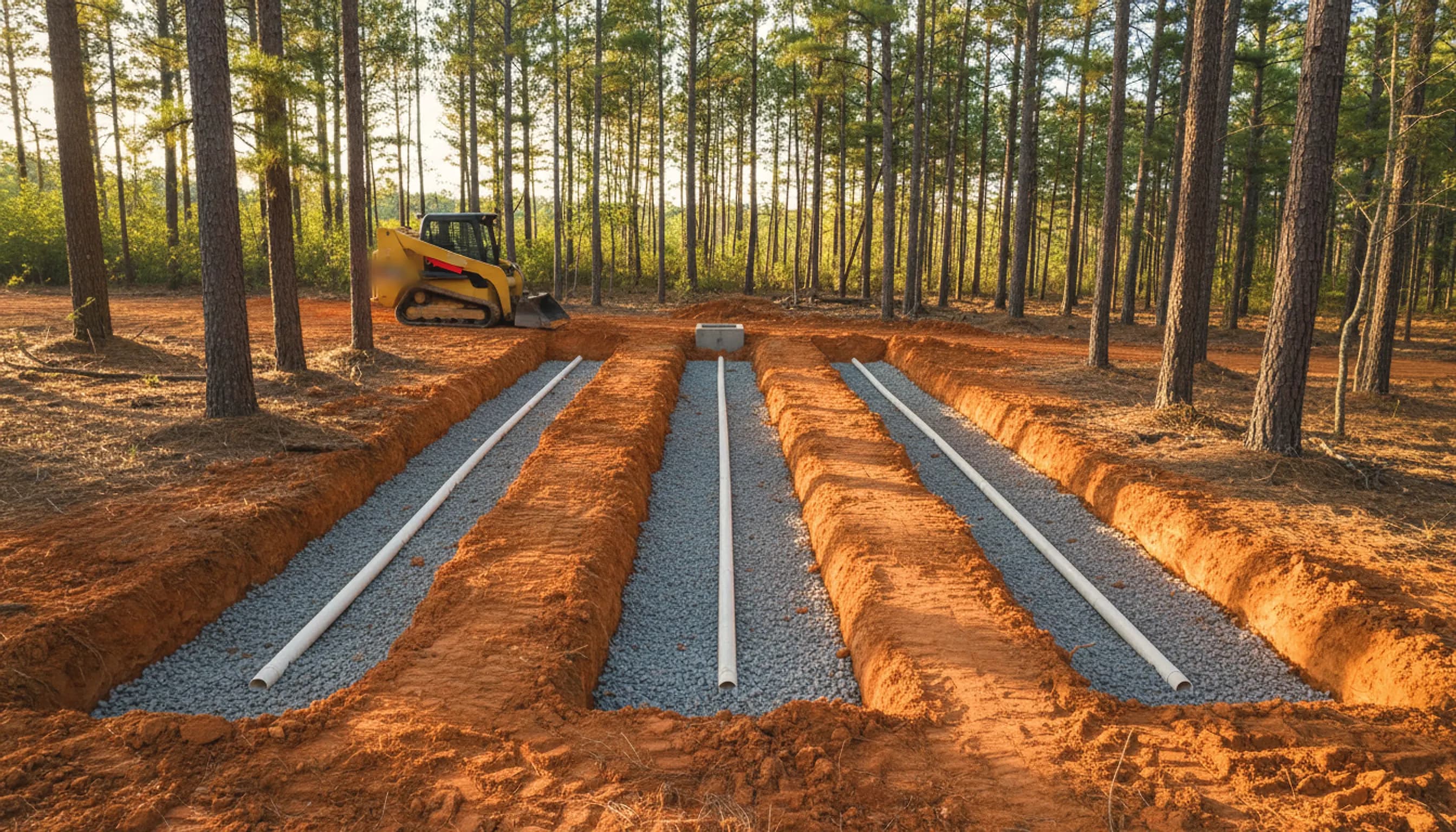
Septic fields sit in the middle of this. Georgia's manual requires absorption fields to be protected from excessive surface water, including stormwater and gutter discharge, and county boards can require bigger septic lots where subsurface drainage is needed. A French drain uphill of a field is often part of the plan on a sloping lake lot, and it has to be drawn with the septic layout, not added later.
Off the lake, town rules show up. Milledgeville charges developed properties a stormwater fee based on impervious area, with single-family homes billed one 3,400-square-foot unit. On state routes such as Highway 44 or US 441, a new driveway pipe sits in GDOT right-of-way and needs a GDOT permit, sized for the 25-year storm.