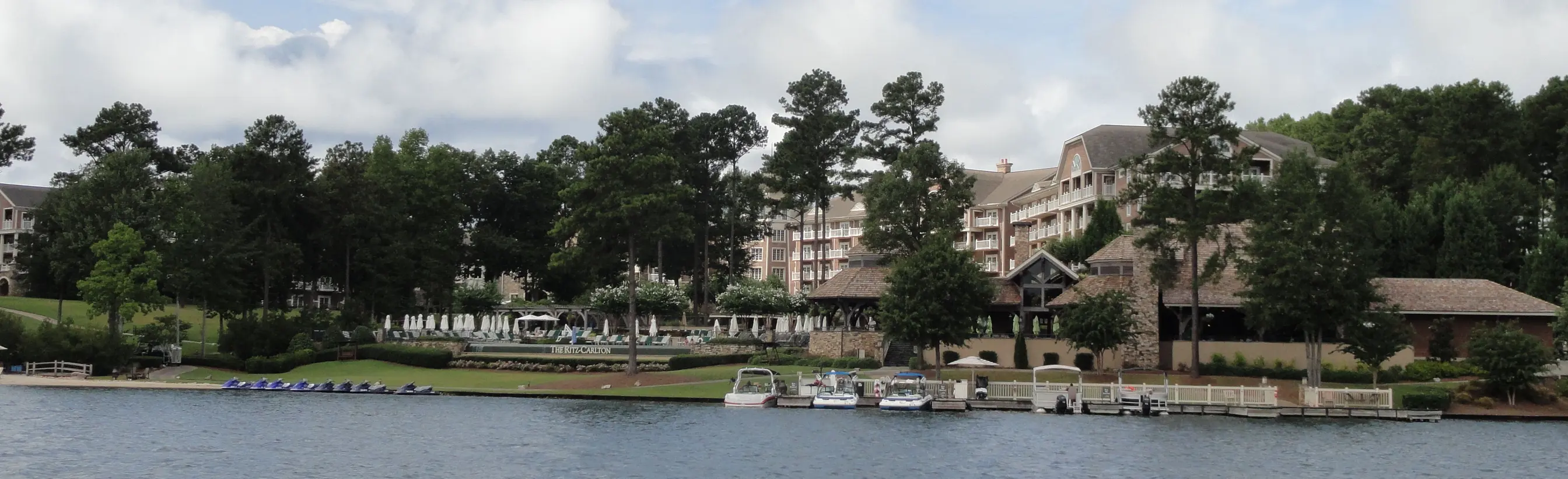
Lake Oconee · Septic & site work
Lake Oconee septic systems and excavation: drip, aerobic and pump systems, sewer lines, clearing, grading and erosion control on lake lots in Greene, Putnam and Morgan counties.
- Lake Oconee & Lake Sinclair
- Residential & commercial
- 10% off: military & first responders
Get a free estimate
or call (678) 863-5620The short answer
Who installs septic systems and does site work on Lake Oconee lots?
A Class Septic Services installs and repairs septic tanks, drain fields, drip, aerobic and pump systems around Lake Oconee, and does the clearing, grading, drainage and trenching around them. Every septic job is permitted by the county Environmental Health office, and state rules keep tanks 25 feet and drain fields 50 feet from the lake.↗↗↗
Reviewed by A Class Septic Services · Last updated
Local facts
Lake Oconee by the record
Each row links to the agency, code or publisher it comes from. Tap a source to check it yourself.
| Topic | What it says | Source |
|---|---|---|
| Owner and dam | Georgia Power's Wallace Dam Hydroelectric Project on the Oconee River; Lake Sinclair is its lower reservoir | Federal Register, June 18, 2018: FERC notice, Wallace Dam Hydroelectric Project relicensing application |
| Surface area (official) | 18,188 acres at elevation 435.0 ft Plant Datum, per FERC's 2018 relicensing notice | Same source as above |
| Full pond and daily swing | Full pond is 435 ft; day-to-day the lake drops as low as 433.5 ft and is pumped back up overnight | Georgia Power: Wallace Dam Operations (relicensing document) |
| Wallace Dam | 2,395 ft long and 120 ft high; six units (four reversible pump-turbines) totaling 321.3 megawatts | Federal Register, June 18, 2018: FERC notice, Wallace Dam Hydroelectric Project relicensing application |
| Shoreline | About 374 miles (Wikipedia text; its infobox says 376) | Wikipedia: Lake Oconee |
| Created / depth | 1979; average depth 21 ft, maximum about 102 ft (Wikipedia) | Same source as above |
| Counties on the water | Greene, Putnam and Morgan; FERC also places the Wallace Dam project in Hancock County | Federal Register, June 18, 2018: FERC notice, Wallace Dam Hydroelectric Project relicensing application |
| Morgan County share | Roughly 25 miles of shoreline along the county's southeastern edge (its Lake Community character area) | Morgan County and Cities Joint Comprehensive Plan 2022 (GA DCA) |
| Lake real estate on Oct 13, 2026 | 711 active listings worth $918.1 million in total, about 110 of them lots and land | Lake Homes Realty: Lake Oconee overview (retrieved Oct 13, 2026) |
The Lake Oconee story
The lake lot septic squeeze
Most Lake Oconee lots were drawn to sell water frontage, not to hold a drain field. The house wants to sit near the water, the driveway wants the gentlest grade, the well (where there is one) wants distance from everything, and the septic system has to fit in whatever ground is left, uphill of the shore and clear of Georgia Power's land.
State rules set the floor. A septic tank cannot go within 25 feet of a lake or other impoundment, and an absorption field cannot go within 50 feet of the normal water level, or within 100 feet of a well. The state's lot-sizing math also throws out the land within 50 feet of the water, so the shoreline strip you are paying the most for counts for nothing when Environmental Health decides whether the lot is big enough.↗↗↗
Greene County, which holds Reynolds, Harbor Club and Del Webb, goes further. Its Board of Health requires 0.75 acre on public water or 1.5 acres on a private well before a lot can use septic, and it measures that area without the strip within 75 feet of Lake Oconee's high-water line. An acre on the plat can come up short once that strip is subtracted.↗
Then the ground pushes back. The ridges between the creek arms are steep, the red clay subsoil moves water slowly, and rock can sit closer to the surface than the plat suggests. That is why so many lake homes end up with a pump tank pushing effluent uphill, an aerobic unit cleaning it first, or a drip field laid along the contour instead of a row of gravel trenches. We build all three, plus plain gravity systems where they still fit.↗
Most Lake Oconee lots were drawn to sell water frontage, not to hold a drain field.
Sewer or septic?
Piedmont sewer or your own septic? It depends on the street
Piedmont Water Company, the private utility based on Old Phoenix Road in Eatonton, lists sewer service in Marina Bay, Del Webb at Lake Oconee, The Landing, Reynolds at Lake Oconee, Great Waters at Lake Oconee and Cuscowilla, plus along the Highway 44 corridor in north Putnam and south Greene. Harbor Club is not on that list.↗
Piedmont's sewer is mostly a low-pressure system. Each house has its own grinder pump that turns wastewater into a slurry and pushes it into a pressurized main. Piedmont says that pump belongs to the homeowner and that its systems are built around E/One units. So even a 'sewer' house at Reynolds has a pump basin, a panel and a pressure lateral in the yard to dig around.↗↗
Being inside a gate does not settle the question. Homesites in the same development have been listed one on public sewer and the next as septic required, so ask Piedmont in writing about the exact lot before you design a house around either answer.↗
How to tell which one you have
- A small alarm panel on a post or wall means a pump: a grinder (Piedmont sewer) or an effluent pump (septic).
- A Piedmont bill with a sewer charge means you are on its sewer; a water-only bill, or a well, usually means septic.
- Greene, Putnam or Morgan Environmental Health can look up a septic permit on file for the address.
More about Lake Oconee
Georgia Power's shoreline rules that decide where the machine can go
Around Lake Oconee, Georgia Power owns a strip of project land above the water on many lots, and it protects a 25-foot vegetative buffer along the shore. Its guidelines say no mechanical clearing, grubbing or change to the land's contour is allowed there without the company's written approval, and the owner has to get the county's permits before working in that strip. Unapproved clearing can cost an owner the dock and future lake permits.↗
The rules are written with septic work in mind. Georgia Power will consider a request to remove trees on its land to make room for a home, a seawall or a septic installation, and it asks for one-for-one replanting with native species. On the drainage side, a pipe may not run across its land to the lake at all: it has to stop at the project boundary and hand the water to a swale, a French drain or a dry creek bed. That rule shapes every downspout and yard drain we lay out on the water.↗
The state adds its own buffer. Georgia EPD's 25-foot buffer is measured from the point where wave action has wrested away the vegetation, not from the full-pond line, and seawalls, bulkheads and rip rap usually carry no buffer because there is no wrested vegetation. In Greene County, any project within 200 feet of state waters needs an erosion and sediment control plan and a land disturbance permit, and when a state notice of intent is required there is a 14-day wait after it is filed before permits issue.↗↗
- New seawalls are permitted only where cut-bank erosion is evident, need rip rap on the lake side and filter fabric behind, and need a turbidity barrier before an old wall is removed.↗
- Dredging is capped at 500 cubic yards per property, and the spoil cannot be used to level land or backfill a seawall.↗
Around Lake Oconee, Georgia Power owns a strip of project land above the water on many lots, and it protects a 25-foot vegetative buffer along the shore.
Soil & terrain
Red clay ridges, creek arms and rock: the ground under the lake
Lake Oconee is a drowned river valley. The Oconee and Apalachee rivers come in from the north and the lake reaches up every creek between them, so most lots sit on a finger of upland falling to water on one or two sides: thin topsoil, thick red clay, and rock somewhere below.↗
A conventional drain field needs at least 24 inches between the trench bottom and seasonal groundwater, rock or impervious soil; with aerobic pretreatment to Class I effluent that can drop to 12 inches. Fields cannot go on slopes over 25 percent without a soil classifier showing the problem can be overcome. And if grading or a cut will change the depth of a planned field, the soil tests have to be done again, which is why we want the septic layout settled before the house pad is cut.↗↗
Clay is also unforgiving in wet weather. Georgia's manual says absorption trenches in soils other than sand must not be dug when wet, because the smearing and compaction cannot be undone. On the lake that means waiting out a wet week.↗
Cecil↗
The largest soil component in Greene County's survey; deep red clay subsoil on Piedmont uplands.
Lloyd↗
Morgan County's largest single map unit is Lloyd clay loam on 6–15% slopes, severely eroded (about 54,880 acres).
Pacolet↗
A major Greene County component on side slopes; clay subsoil over weathered rock.
Davidson↗
The largest component in the Baldwin-Jones-Putnam survey, covering Putnam's lake shore: dark red, 40–75% clay subsoil.
- Soil series · USDA NRCS
More about Lake Oconee
Why drip, aerobic and pump systems are common on the lake
A pump system is the most common answer when the only good soil is uphill of the house. A dosing tank is also required on any conventional system longer than 500 feet of trench. An aerobic treatment unit cleans the effluent before it reaches the soil, which lets the field sit shallower over rock or clay. A drip system goes one step further: aerobic pretreatment followed by small tubing laid 8 to 12 inches deep along the contour, which can follow a slope that would never take a gravel trench.↗↗↗
Lake houses that sit empty for weeks and then fill up for a holiday weekend are hard on any system, hardest on the ones with pumps and controls. Know where your alarm panel is and who to call when it sounds.
- Drip fields need aerobic pretreatment to 25 mg/L BOD5 and 30 mg/L TSS, at least 12 inches of separation to groundwater or rock, and a replacement area equal to 100% of the field.↗
- Aerobic units must be on DPH's approved list, come with a three-year initial service policy (six visits), and stay under maintenance for the life of the system.↗
- DPH notes aerobic units lose performance after power failures longer than about 48 to 72 hours.↗
A pump system is the most common answer when the only good soil is uphill of the house.
Permits · County Environmental Health (Greene, Putnam or Morgan), with Georgia Power and the county land-disturbance office
From raw lake lot to an approved system
- 01
Confirm sewer or septic for the exact lot with Piedmont Water, then get the soil work done to size the system.↗
- 02
Get the county Environmental Health construction permit before any development. The board must act on a complete application within 20 days; the permit lasts up to 12 months.↗
- 03
In Greene County, add the erosion and sediment control plan and land disturbance permit (with the septic letter) when the lot is within 200 ft of state waters, in a post-2000 common development, or disturbing over an acre.↗
- 04
Get Georgia Power's written approval before any clearing, tree removal or grade change in the 25-ft buffer or on project land.↗
- 05
Call Georgia 811 at least three business days before digging; on average seven utilities are notified.↗
- 06
Install and leave it open for the county's final inspection; nothing is backfilled until written approval, and later grading that affects the system voids it.↗
Georgia rule Ga. Comp. R. & Regs. r. 511-3-1-.07
“No absorption field may be built less than 50 feet from the normal water level of any impoundment, tributary, stream or other body of water.”
Local facts
Who permits septic on each shore of Lake Oconee
Each row links to the agency, code or publisher it comes from. Tap a source to check it yourself.
| Topic | What it says | Source |
|---|---|---|
| Greene County (Reynolds, Harbor Club, Del Webb, Parks Ferry, Old Salem) | Northeast Health District EH, 1031 Apalachee Ave, Greensboro; 706-453-4471; specialists in office 8:30–10 a.m. weekdays | Northeast Health District: Greene County locations (Environmental Health) |
| Putnam County (Great Waters, Cuscowilla, Lawrence Shoals, GA 44 corridor) | North Central Health District EH, 117 Putnam Drive, Suite C, Eatonton; (706) 485-8591; weekdays 8 a.m.–4:30 p.m. | North Central Health District: Putnam County Environmental Health Department |
| Morgan County (north shore, Apalachee arm, Buckhead side) | Northeast Health District EH, 2005 South Main Street, Suite 200, Madison; 706-752-1266 option 3; specialist in office early mornings on select weekdays | Northeast Health District: Morgan County locations (Environmental Health) |
| Hancock County (Wallace Dam side) | North Central Health District EH, 516 Boland Street, Sparta; (706) 444-6616; specialist in the county Tuesdays and Thursdays | North Central Health District: Hancock County Environmental Health Department |
| Shoreline, buffer and lease questions | Georgia Power East Georgia Lake Resources Office, 125 Wallace Dam Road NE, Eatonton; 706-484-7500 | Georgia Power: East Georgia Lakes (Oconee/Sinclair) |
Towns we serve
Lake Oconee towns and communities we work in
- Reynolds Lake OconeePiedmont sewer on many streets, septic on others.Reynolds Lake Oconee septic & sewer
- Great WatersPutnam side of Reynolds; many homes on septic.Great Waters septic & sewer
- The Landing (Port Armor)Grinder pumps and laterals, not tanks.The Landing (Port Armor) septic & sewer
- Harbor ClubOff Piedmont's sewer list; mostly septic.Harbor Club septic & sewer
- CuscowillaGated Putnam golf community on Piedmont sewer.Cuscowilla septic & sewer
- Del Webb Lake OconeeGreene active-adult community on Piedmont sewer.Del Webb Lake Oconee septic & sewer
- Lake Oconee Parkway (GA 44)The GA 44 corridor and Lake Oconee Village, where Piedmont sewer runs.Lake Oconee Parkway (GA 44) septic & sewer
- Greene County shorelineParks Mill and the deeded lots outside the gates; septic country.Greene County shoreline septic & sewer
- Harmony Road and the Putnam shoreRiverbend Estates, River Bend Cove and Phoenix Lake; lakefront lots on septic.Harmony Road and the Putnam shore septic & sewer
- Morgan County shorelineOconee Shores and the Buckhead side of the Apalachee arm.Morgan County shoreline septic & sewer
- GreensboroGreene seat at I-20 exit 130.Greensboro septic & sewer
- EatontonPutnam seat; GA 44 runs east to the lake.Eatonton septic & sewer
- MadisonMorgan seat above the north end.Madison septic & sewer
- BuckheadMorgan town draining to Sugar Creek and the Apalachee.Buckhead septic & sewer
Also in the county
- Marina Bay · On Piedmont's sewer list.
- Lawrence Shoals and Wallace Dam Road · Georgia Power park near the dam.
- Parks Ferry and Old Salem · Georgia Power parks on the Greene shore.
- Sugar Creek, Long Shoals and Armour Bridge · Georgia Power boat ramps.
- Redlands and Swords · Forest Service ramps.
Services here
What we do on Lake Oconee lots
- 01Septic System InstallationNew and replacement systems sized to Greene's 75-ft rule and the state's 50-ft lake setback.Septic System Installation details
- 02Drip Septic SystemsShallow tubing on the contour for steep ridges and shallow rock between the creek arms.Drip Septic Systems details
- 03Aerobic Septic SystemsPretreatment that lets a field sit 12 inches over clay or rock instead of 24.Aerobic Septic Systems details
- 04Septic Pump SystemsPump tanks, floats and alarms where the only good soil is uphill of the house.Septic Pump Systems details
- 05Septic RepairOlder lake houses with tired baffles, lines and distribution boxes.Septic Repair details
- 06Sewer Lines & TapsPressure laterals and basins for Piedmont low-pressure sewer connections.Sewer Lines & Taps details
- 07Erosion ControlSilt fence, straw and stabilization that keeps red clay out of the cove.Erosion Control details
- 08French DrainsDrainage that stops at Georgia Power's boundary, as its guidelines require.French Drains details
- 09Land & Lot ClearingClearing that stays out of the 25-ft buffer and project land.Land & Lot Clearing details
- 10Grading & DrivewaysHouse pads and drives on sloping lots, graded after the septic layout is fixed.Grading & Driveways details
Also available:ExcavationDrain Field Installation & RepairWaterlines & MainsTrenching & BackfillStorm DrainsStump RemovalDump Truck & HaulingStorm Shelters & Safe Rooms
Local service pages
Our services in Lake Oconee
- Aerobic Septic Systems in Lake Oconee
- Drain Field Installation & Repair in Lake Oconee
- Drip Septic Systems in Lake Oconee
- Erosion Control & Land Drying in Lake Oconee
- Excavation Services in Lake Oconee
- French Drain Installation in Lake Oconee
- Land & Lot Clearing in Lake Oconee
- Septic System Installation in Lake Oconee
- Septic Pump Systems in Lake Oconee
- Septic System Repair in Lake Oconee
What it costs
What lake-lot septic and site work tends to cost
Septic system installation (typical)
$3,590–$12,463; average about $8,016
Typical market range — HomeAdvisor: Septic System Installation Cost (updated Jun 20, 2026), 2026
Drip septic system
$8,000–$18,000
Typical market range — HomeAdvisor: Septic System Installation Cost (updated Jun 20, 2026), 2026
Aerobic septic system
$10,000–$20,000
Typical market range — HomeAdvisor: Septic System Installation Cost (updated Jun 20, 2026), 2026
Land clearing, one acre
$500–$2,000 lightly wooded; $3,600–$5,600 heavily forested; grading $1,000–$3,300 more
Typical market range — HomeAdvisor: Land Clearing Cost (updated Jun 17, 2026), 2026
What moves the price
These are third-party typical market ranges, not our prices. Every job is quoted after we see it — estimates are free.
Free estimate: (678) 863-5620- 01Whether the lot is on Piedmont sewer or needs its own system
- 02Slope, rock and how far effluent must be pumped uphill
- 03Greene's 75-ft exclusion and the space left for a 100% repair area
- 04Silt fence, straw and stabilization within 200 ft of the lake
FAQ
Lake Oconee septic and site work questions
Straight answers, with the rule or record behind them. Still unsure? Call and ask the crew that digs.
(678) 863-5620How far does a septic system have to be from Lake Oconee?
Georgia's rules keep the septic tank at least 25 feet from the lake and the drain field at least 50 feet from its normal water level. A field also has to be 100 feet from any well. Georgia Power land and the 25-foot buffer have to stay undisturbed on top of that.
Source: Ga. Comp. R. & Regs. r. 511-3-1-.07, Absorption Fields (LII)
What is Greene County's 75-foot rule?
When Greene County sizes a lot for septic, it leaves out any land within 75 feet of Lake Oconee's high-water line. The lot then needs 0.75 acre on public water or 1.5 acres on a private well. It matters at Reynolds, Harbor Club and the rest of the Greene shore.
Source: Greene County Board of Health: Lot Size Ordinance (effective Sept 7, 2018)
Is Reynolds Lake Oconee on sewer or septic?
Both. Piedmont Water lists sewer service at Reynolds at Lake Oconee, Great Waters, The Landing, Cuscowilla, Del Webb and Marina Bay, but individual homesites inside those gates have been sold as septic required. Ask Piedmont about the exact lot.
Source: Piedmont Water Company: Wastewater Services (sewer communities list)
Who owns the grinder pump at a Lake Oconee house on Piedmont sewer?
The homeowner. Piedmont Water says the grinder pump is the owner's property and responsibility, and its systems are designed around E/One pumps. Before an absence of more than two weeks, run clean water until the pump cycles and leave the power on.
Can I clear trees down to the water on my Lake Oconee lot?
Not without Georgia Power's written approval. Its guidelines bar mechanical clearing, grubbing and grade changes in the 25-foot vegetative buffer and on its project land. It will consider tree removal for a house, seawall or septic installation if the trees are replanted one-for-one with natives.
Source: Georgia Power: Lake Oconee Shoreline Guidelines (PDF)
Do I need a land disturbance permit to build on a Greene County lake lot?
Usually. Greene County requires an erosion and sediment control plan and a land disturbance permit for work within 200 feet of state waters, which covers most lakefront lots, as well as for jobs over an acre or in post-2000 developments. When a state notice of intent is needed, permits wait 14 days after it is filed.
Source: Greene County, GA: Erosion Control Permit Requirements
Can I burn clearing debris on a Lake Oconee lot?
It depends on the county and the season. EPD's May 1 to September 30 burn ban covers Putnam and Morgan but not Greene in 2026. Land-clearing burns still need a Georgia Forestry Commission permit outside the ban, and hauling or chipping are the alternatives.
Source: GA EPD press release, Apr. 29, 2026: Annual Ban on Open Burning
Do you give a military or first responder discount on lake work?
Yes. A Class Septic Services takes 10% off for military and first responders. Call (678) 863-5620 to set up a free estimate on your Lake Oconee lot.
Nearby areas
Around Lake Oconee
- Lake Sinclair septic & sewerBelow Wallace Dam: Lake Sinclair septic and lease-lot site work.
- Greene County septic & sewerGreene County septic rules, fees and the 75-ft lake exclusion.
- Putnam County septic & sewerPutnam County septic permits on both lakes.
- Morgan County septic & sewerMorgan County septic and site work at the north end.
- Hancock County septic & sewerHancock County septic on the Wallace Dam side.
Guides
Reading for Lake Oconee owners
- Georgia Power shoreline rules and septicThe buffer, tree and drainage rules in one place.Read the guide
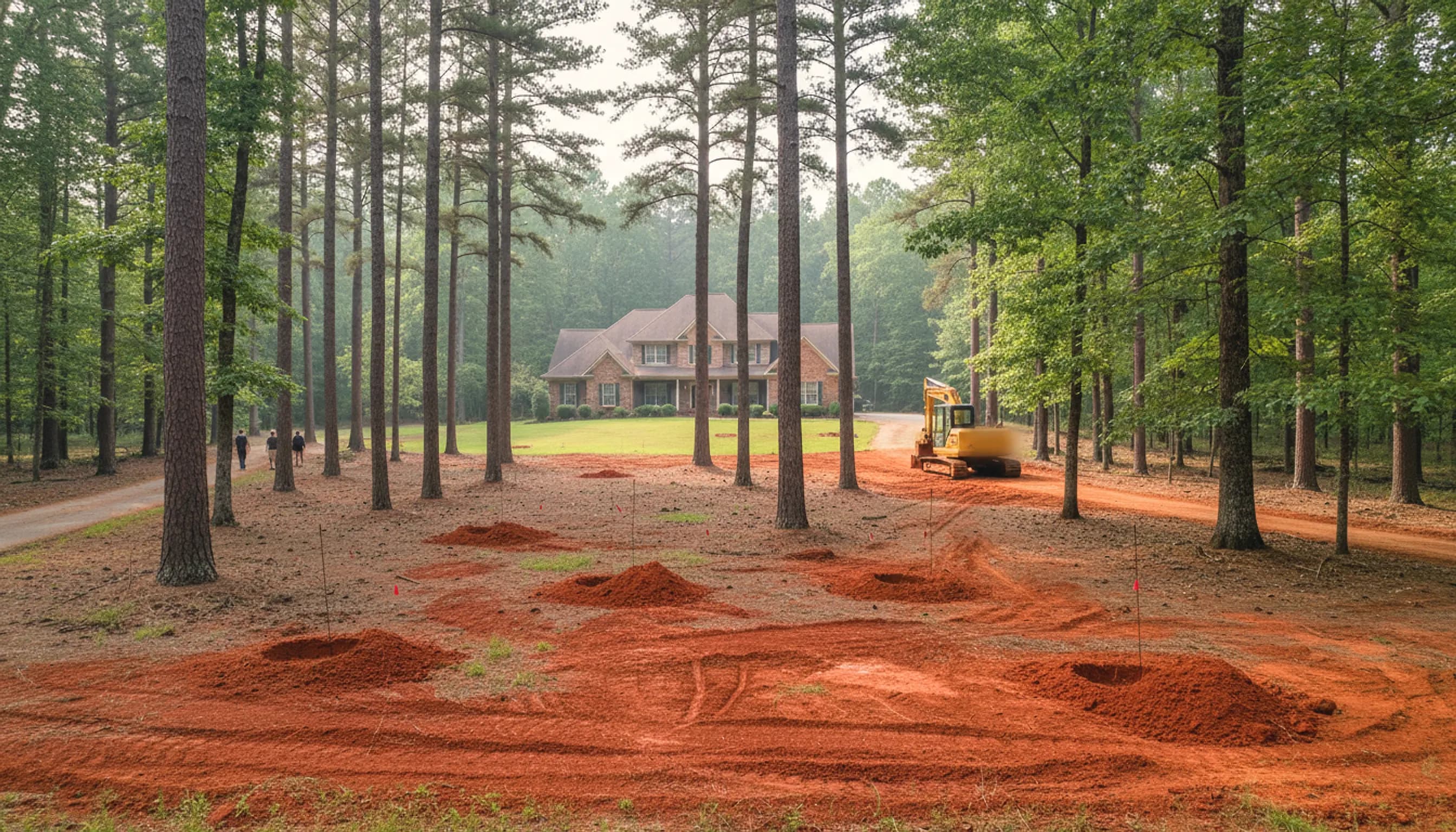 Drip vs. conventional septic on a lake lotHow depth, slope and rock decide the system.Read the guide
 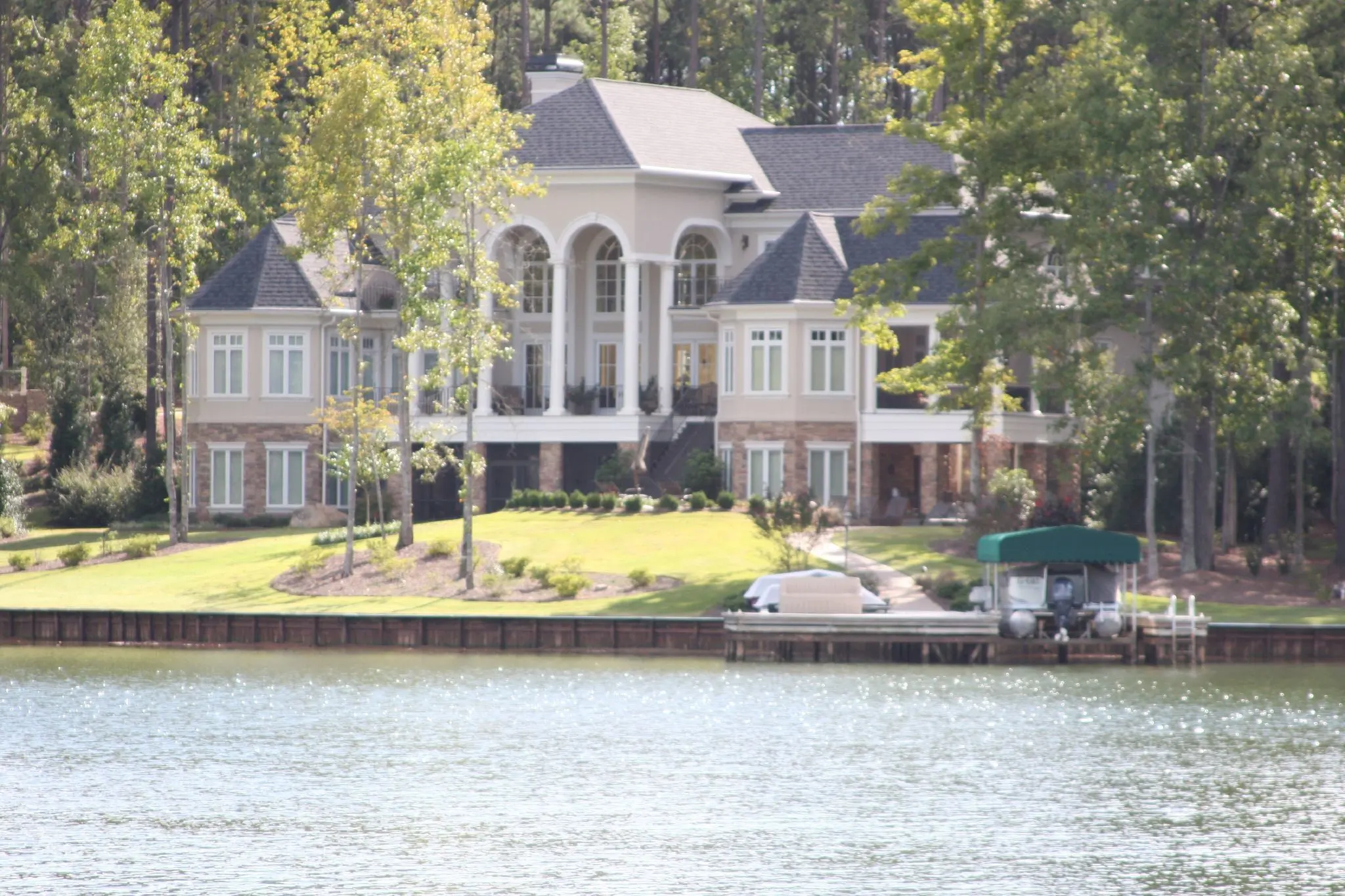 Lake Oconee & Lake Sinclair septic guideEvery county office, permit path and utility in one table.Read the guide
Sources
Where these facts come from
Rules, costs and local facts on this page link to the agency, code or publisher that states them. Cost figures are third-party market ranges, not our prices — estimates are free.
Reviewed by A Class Septic Services · Last updated
- 1Ga. Comp. R. & Regs. r. 511-3-1-.05, Septic Tanks (LII)
- 2Ga. Comp. R. & Regs. r. 511-3-1-.07, Absorption Fields (LII)
- 3Ga. Comp. R. & Regs. r. 511-3-1-.03, General Requirements for On-Site Sewage Management Systems (LII)
- 4Federal Register, June 18, 2018: FERC notice, Wallace Dam Hydroelectric Project relicensing application
- 5Georgia Power: Wallace Dam Operations (relicensing document)
- 6Wikipedia: Lake Oconee
- 7Morgan County and Cities Joint Comprehensive Plan 2022 (GA DCA)
- 8Lake Homes Realty: Lake Oconee overview (retrieved Oct 13, 2026)
- 9GA DPH Manual for On-Site Sewage Management Systems (March 2026), Section M: Lot Sizing
- 10Greene County Board of Health: Lot Size Ordinance (effective Sept 7, 2018)
- 11GA DPH Manual for On-Site Sewage Management Systems (March 2026), Section F: Dispersal Systems
- 12Piedmont Water Company: Wastewater Services (sewer communities list)
- 13Piedmont Water Company: Grinder Pumps
- 14Georgia Power: Lake Oconee Shoreline Guidelines (PDF)
- 15GA EPD: Field Guide for Determining the Presence of State Waters That Require a Buffer (2017)
- 16Greene County, GA: Erosion Control Permit Requirements
- 17GA DPH Manual for On-Site Sewage Management Systems (March 2026), Section B: General Site Provisions
- 18USDA NRCS Soil Data Access (SSURGO), survey area GA133 Greene County
- 19USDA NRCS Official Series Description: Davidson series
- 20GA DPH Manual for On-Site Sewage Management Systems (March 2026), Section E: Effluent Distribution and Dosing Devices
- 21GA DPH Manual for On-Site Sewage Management Systems (March 2026), Section D: Pretreatment
- 22Georgia 811: Contact Georgia 811 Before You Dig - How it Works (2025)
- 23Greene County EH Fees (effective August 1, 2024)
- 24Northeast Health District: Greene County locations (Environmental Health)
- 25North Central Health District: Putnam County Environmental Health Department
- 26Northeast Health District: Morgan County locations (Environmental Health)
- 27North Central Health District: Hancock County Environmental Health Department
- 28Georgia Power: East Georgia Lakes (Oconee/Sinclair)
- 29HomeAdvisor: Septic System Installation Cost (updated Jun 20, 2026)
- 30HomeAdvisor: Land Clearing Cost (updated Jun 17, 2026)
- 31GA EPD press release, Apr. 29, 2026: Annual Ban on Open Burning
Ready when you are
Raw lake lot or a tired old system? One crew, ground to final inspection.
From Harbor Club to Great Waters to the Apalachee arm, we lay out the septic system, clear and grade around it, and keep the clay out of the cove. Call (678) 863-5620 for a free estimate.
(678) 863-5620- Lake Oconee & Lake Sinclair
- Residential & commercial
- 10% off for military & first responders
Free estimate
or call (678) 863-5620