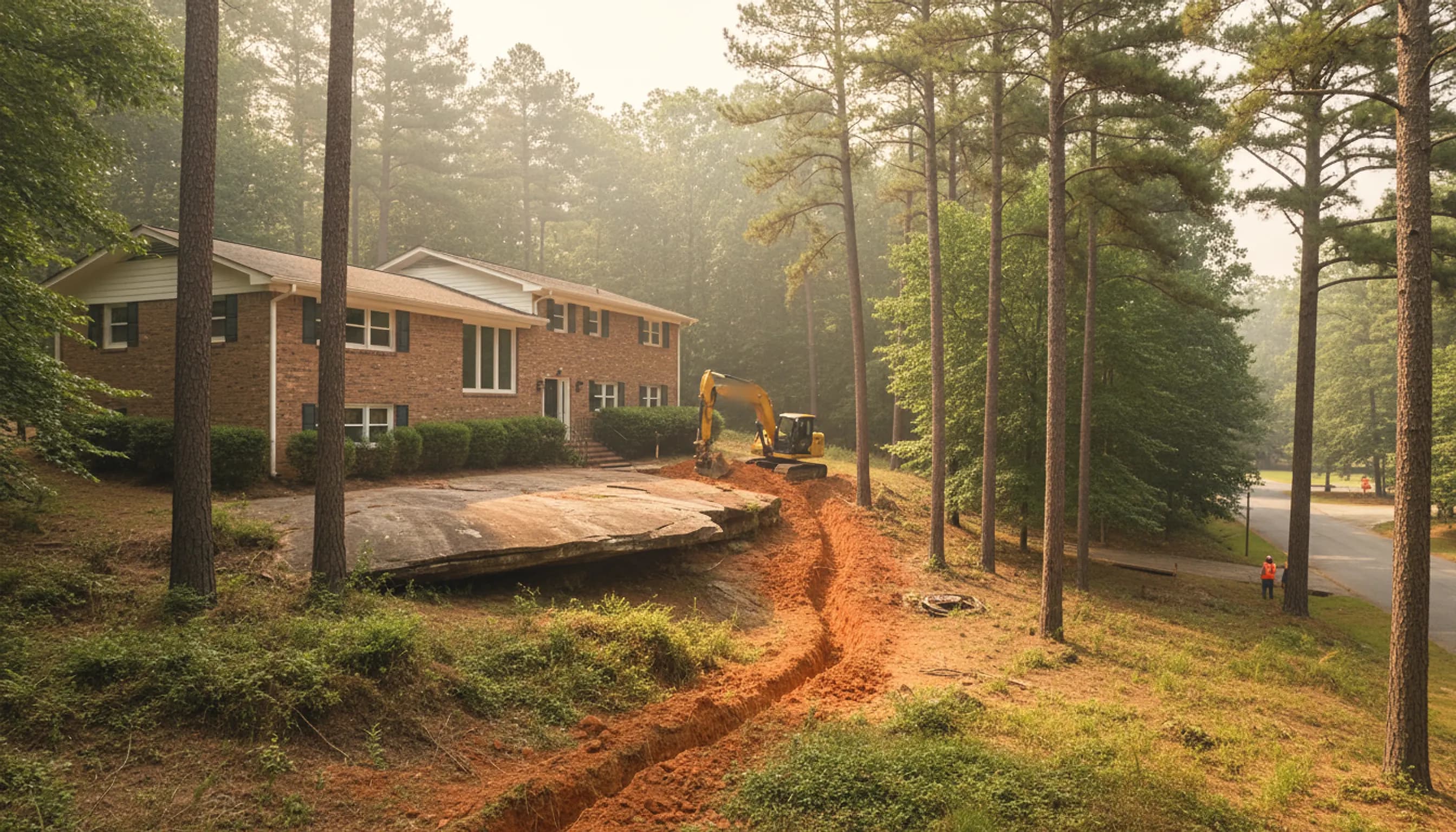
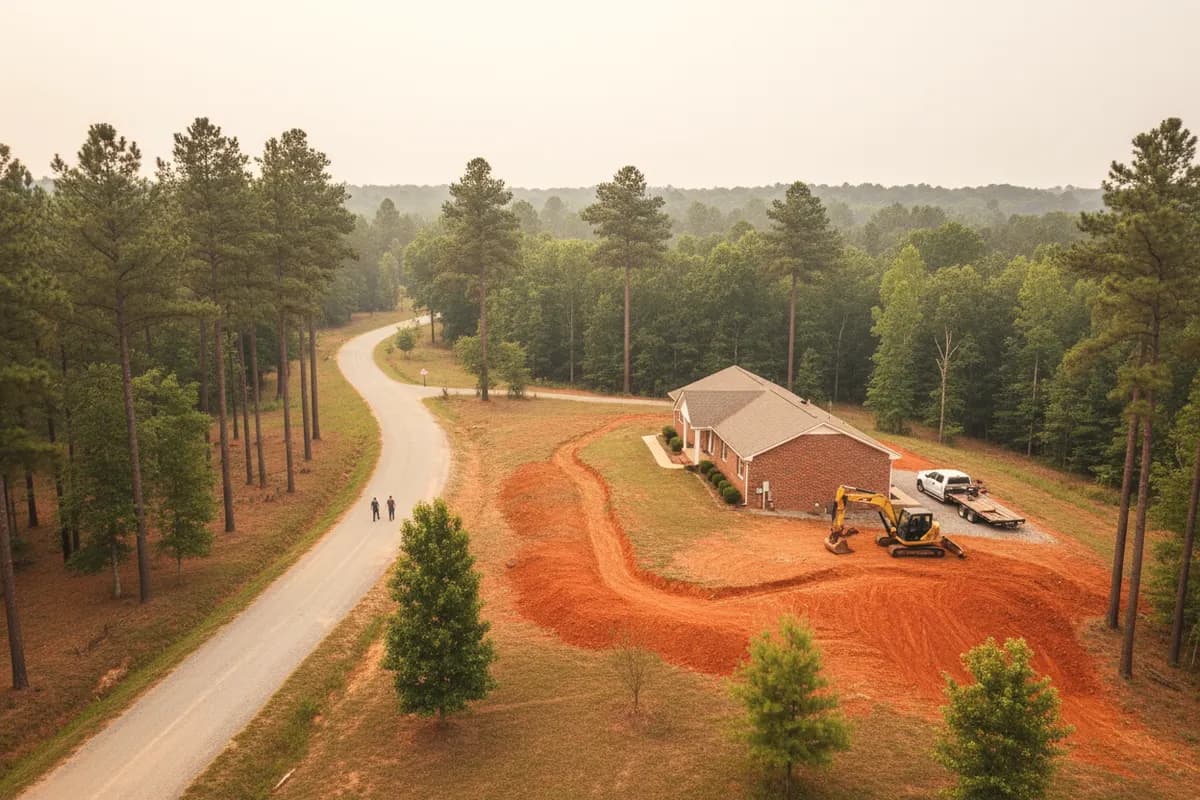
Lake houses tend to sit far from the road. That means long trenches: a water service from a meter at the street or a community system, a power or generator feed, a fiber or data conduit, sometimes a force main from a septic pump tank up to a field on the high side of the lot. A 300-foot run is normal, and the trench crosses everything on the way, including the driveway, the septic area, the existing irrigation and the neighbor's easement.
The ground changes along those runs. A trench can start in deep Cecil or Davidson clay near the road, which NRCS describes as having no seasonal high water table within 60 inches (Cecil series), then hit Wilkes soils on a side slope where weathered rock starts 10 to 20 inches down (Wilkes series). In a Helena soil in late winter you may open a trench and watch it fill with perched water at 18 to 30 inches (Helena series). We plan depth, bedding and dewatering around what the ground does, and rock in the trench bottom gets removed or covered with bedding so it cannot crack a pipe.
Near the water, Georgia Power's Lake Oconee guidelines list pipes across its property to the shoreline among the items not allowed, and say drainage pipes must stop at the project boundary (Georgia Power). Irrigation pumps for homes next to its land are allowed only on land, at 2.5 HP or less, with the wiring done by an electrician as the guidelines require. So a trench to a dock or pump has to be planned with Georgia Power's permit in mind, and the electrical work belongs to an electrician.
Septic setbacks shape trench routes too. Georgia's rules keep septic tanks 50 feet from wells and absorption fields 100 feet from wells (511-3-1-.07). When we trench a new water line from a well, or a septic line past one, those distances decide where the trench can go.